
 In recent months, much has been written and said about both the problems and benefits for one-parent families on social welfare that have been put through the One-Parent Family Payment (OFP) reform process. At the heart of this are the cuts in income faced by many parents who are working part-time and in receipt of social welfare.
We asked Theresa, Emer and Sharon, each of whom is parenting alone, working part-time and has been recently transitioned from the OFP, to share the reality of their experiences of this reform process. Despite the fact that Theresa, Emer and Sharon is each doing what Government said this reform is supposed to enable – activation – all of their families have suffered a substantial financial loss. You can read what they told us below.
One Family believes that it is counter-productive to Government policy to enforce income losses on poor families when the objective of the reforms is to support people off welfare and out of poverty into sustainable employment. It is also counter-productive to imply that people parenting alone and in receipt of the OFP do not want to work. They do, and many are also in education.
These debates have not been helped by misinformation about how comparatively ‘well-off’ some families are on social welfare, or how much better off they could be in different circumstances; for example, if they were to increase their hours of part-time employment to become eligible for Family Income Supplement (FIS). One Family is responding clearly with some facts and the real-life case-studies of Theresa, Emer and Sharon in order to demonstrate the reality for the families we work with and represent.
Some facts in response to Government briefings:
- Atypical examples | It is unhelpful that atypical examples are being consistently put into the public domain, such as the example indicating that a lone parent with three children who works over 19 hours per week and qualifies for BTWFD will earn the same as a teacher. There are very few lone parents with three children (Census 2011 indicates 15.7% on all one-parent families, but this could be as low as 11% for those actually in receipt of a social welfare payment); the childcare costs associated with this atypical example are not factored in; and neither is the fact that BTWFD is only available at full rate for one year, is reduced completely after two, and is not available to those transitioned before 1 January this year. The ‘typical’ one-parent family includes one child (56.11%) or two children (28.17%).
- Other countries | Comparisons to other countries that require lone parents to be available for work when their children are younger than 7 are unhelpful and unrealistic as the structures in place in countries referenced such as New Zealand, the UK and the Netherlands are not comparable to Ireland due to the lack of available childcare here and other structural barriers. Also, there are far higher rates of investment in social services in these countries that practically enable parents to return to the work force.
- FIS | It is unhelpful to posit the gain that parents might get if they are able to increase their hours of work to over 19 whilst on the JSTA so that they become eligible for FIS, as this is extremely difficult for many to achieve. We are aware of many sectors, including government funded services, where people are unable to increase their hours. These commonly include childcare staff (particularly those providing ECCE hours); SNAs and other school staff who are frequently let go every summer; and retail staff who are subjected to zero hour contracts etc. It seems unrealistic that Government will be able to work with employers on this or that employers can be expected to always be in a position to create more hours, and it is unrealistic to expect employees to be able to demand more hours if those hours are not available.
- BTWFD | Since the reform introduction, some 17,000 lone parents have already transitioned from the OFP scheme to other income support payments in 2013 and 2014. This means that none of these parents were entitled to the Back To Work Family Dividend (BTWFD) which is supposed to support families to move from social welfare into employment.
- Childcare | The severe lack of affordable, accessible high quality childcare being uniformly available throughout Ireland remains a massive barrier. This problem for all families with children is far from being resolved; or any workable, time-lined potential solution been put forward by Government. Ireland’s childcare costs remain amongst the most expensive in the world, second only to the US. These reforms aimed to move more lone parents into the workplace are being implemented at a time when even many parents in working two-parent families feel they have no choice but for one partner to leave work owing to childcare costs being unaffordable. People parenting alone do not have a parenting partner to assist with childcare, school runs, school holidays etc. while at work and often do not have family support available.
- Income loss totals | Approximately 11,000 parents and families have lost income as a result of being transitioned to Jobseeker’s Transitional Allowance (JSTA) or Jobseeker’s Allowance (JSA) from the OFP. We do not yet know how many have or will gain financially, but we hope that this figure is high.
- Income loss amounts | The figures proposed by DSP of the losses that parents will face have been consistently under-estimated, based on testimony to One Family from many parents. We have heard of losses ranging from €30 to €140 per week. In the real-life case studies below, three parents clearly outline how they have lost from €45.20 to €115 per week.
Theresa, Emer and Sharon are all doing what Government says this reform process was implemented to support, and which should result in an increase in income: they are all working part-time over 19 hours per week and in receipt of FIS.


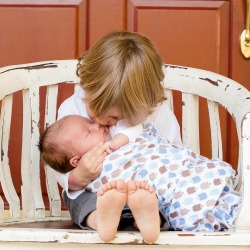 Becoming a big brother or sister can be very exciting for many children, and at the same time a little scary. They may be wondering how life will change for them in both positive and negative ways. Some children as they get older prefer being an only child, while others long for a sibling. In this article we will explore what it means for children when one parent has a new baby – meaning they are now the big brother or sister – and what issues this can raise for children from separated families.
- Often very young children don’t understand what is happening until the baby arrives home and they see their parent holding it. At times they think the baby will be going back to where it came from, and it can be a shock when they realise the baby is staying and maybe even sleeping in their old cot.
- If the baby will not be living with the child full-time, it can create a variety of responses from the child. The child may be very keen to stay with the new baby, to protect it. It can feel like it is their baby at times. So parting and returning to the other parent may be very difficult for them.
- For other children, the new baby may pose a treat. Now they have to share the parent not only with a new step parent/partner but also with a new sibling. When will they get quality time? This can cause a feeling of unsettlement for children of all ages.
- It is important for all the parents – both biological and step-parents – to try and build in quality time with the first child. It is crucial to help them see they have a very valued place in the family and that their needs are still very important.
- Children can at times feel abandoned and neglected during separations, particularly at times when adult needs become more prominent and take over. Hopefully by the time a new baby is arriving, things will have settled down and children are feeling more secure in the new relationships that have formed. It is key when a new baby arrives to ensure that the child does not again experience these feelings, whereby their needs were not at the forefront of family life.
- It is important also to give your child good, positive language to describe the changes in their family to friends and other family members. ‘Half brother’ or ‘Half sister’ are not the most preferred terms as a person they describe would not feel happy about being ‘half’ of something. It may be better to just support them to say they have a new sister/brother. Then they can go on explain that Daddy or Mammy have this baby. As parents, we can help our children to understand blended families as they get older. Once they have an understanding and a positive experience they will flourish.
- Help the child to understand their unique bond with this child. I know it can be hard for parents to accept when the other parent moves on and has more children, but the baby exists and will always have a bond to your child. Try to be open and support the relationship. Try not to see this as a threat.
- Often parents and older children ask why the other parent had more children. They may feel they already struggled to have time for the first born, but this is life and things are not always planned or thought out. There may be issues around maintenance as now money has to go further to support the new baby. Your child may be getting less. Again you may need to sit and talk with the other parent about the impact this will have and try to reach agreement, as the courts will usually allow a person provide the best they can for each child. The first born will not get preference.
- The quality time a child shares with the other parent may be reduced when a baby is born. You would hope this to be very temporary, as otherwise the older child is being set up to resent the new baby. As parents, it is up to us to try not to give one child less attention when a new baby arrives. This can be difficult, maybe you can try and get others to help with the newborn. This will allow you time to support your older child to know they are very valued within your life and extending family.
- When children are having time with the other parent, we can expect that it will be one to one time. Parents may request the new child not to be part of this time. While it is important for children to have one to one quality time with parents, we must remember that children also need to be immersed into their parent’s new family form. It will be hard for them to understand and adjust, no matter what the age, but if this is what the family is going to be, then why try and make it different? At times it may be for the parents’ benefit to exclude other new family but really children can often adapt positively and smoothly to new experiences. What matters most is how they are parented and supported with the changes. It is about keeping their needs central, and for both parents to have a focus on meeting the child’s needs first and foremost.
This ’10 Ways to’ article is by One Family’s Director of Children & Parenting Services, Geraldine Kelly, as part of our weekly ’10 Ways to’ series of parenting tips. You can read the full series here.
Next you might like to read: 10 Ways to Address Sibling Rivalry
LIVE Facebook Q&A with Geraldine on this topic Tuesday 21 July from 10am-11pm in our NEW One Family Parenting Group which is a closed Facebook group (meaning that only members can read posts) that anyone can join. Post your questions and share your experiences.
Find out more about our parenting skills programmes and parent supports. For support and information on these or any related topics, call askonefamily on lo-call 1890 66 22 12 or email support@onefamily.ie.
 For many parents it can feel like you are on a treadmill that is never switched off. On Monday you might be asked, how was your weekend? You look in amazement at the person and try to think, the weekend, when was that? Whether sharing parenting, parenting alone, when your children are very young or teenagers, it never stops. Keeping on top of it all is very challenging and we often forget to be mindful of our own well being. We laugh at the though of it. Obviously the person who coined the term ‘self care’ has no children!
But here it is again – self care. If you can’t find the time to look after yourself and your needs, what type of parent will you be? You may be coping alright now, but how long until the batteries run dry? We all have areas in our lives that are not going too well, sometimes it is because we don’t have the energy or time to put into them.
This summer, could you take on the challenge of trying to do one thing for yourself each day? It is just for you now, but really it is an investment in your ability to parent and thus in your children. They need parents who can stay on the treadmill for a very long time.
Here are some ideas to help get you started:
- Take a 30 minutes walk, once a week: on your own ideally or bring the buggie if you must. It helps clear the mind and keep you feeling energised. This will also give you time to see the world and possibly bump into the neighbours for a chat.
- Read a book that is not about fairies and princesses and superheroes. Can you find an hour a week to read a chapter? Connect to the adult world around you. It is amazing how we forget it exists. This will also give you something to talk about. We often think if we did meet someone, what would we talk about? Our lives are so focused on our children, it’s easy to forget how to have adult conversations.
- Join a parent and toddler group. Even though children are with you, it allows great opportunities to talk with other parents and possibly widen your social circle. Some groups are great at organising trips and events. Check in with your local community center, community bulletin/newsletter and even the local shop notice boards to find groups near you.
- Use a drop in crèche for one hour a week. Can you budget to allow yourself one hour off a week? You can just sit and think, plan, read or drink coffee. Basically, this is one hour for you to stay still.
- Can you arrange for a relative to take your children once a month? One day off or if you are really lucky one night off is a great opportunity to recharge the batteries. A night of undisturbed sleep does wonders for the body and mind. Then you will feel ready for the children again when they return.
- If your children go to their other parent, can you do things in this time for yourself? Many parents use this time to cook, freeze dinners, clean and get ready for another week. Even though this will make the next week run smoother it does not really count as time spent for you. Think about what hobbies you had as a child, or something you wished you had done. Can you join a club – a walking club, book club, hobby or maybe even a study group? Have you had time to think about what you want for you?
- We take a lot of time to plan what our children will eat. Have they eaten their 5 a day? We challenge the other parent to reduce the intake of junk food. But how often do you look at your diet. Can you take some time to plan your 5 a day? You are your child’s best role model after all.
- Can you arrange a babysitter club? It does not have to be at night time as it depends on what you enjoy doing. Can your friend take your child for a few hours to allow you some time and then you do the same for them?
- Many parents buy too many clothes for their children. Do they really need all these clothes? Do they notice what they wear? Why not put some time in to your own wardrobe? What could you do with getting? At times we avoid going out and about as we feel we have nothing to wear. It would be a great resource for your child to have a parent who is confident in how they look.
- Ask for help. Parenting is very challenging no matter what form your family takes. Seek out supports. Access professional parenting supports like parenting courses or one to one mentoring – One Family have parenting supports available in many locations both in Dublin and in other. Don’t go it alone when others would love to be invited to join you. (See below for more information on One Family parenting supports.)
This summer take time for you. It may seem selfish at first, but your children will be the ultimate winners when you succeed.
This ’10 Ways to’ article is by One Family’s Director of Children & Parenting Services, Geraldine Kelly, as part of our weekly ’10 Ways to’ series of parenting tips. You can read the full series here.
Next you might like to read: 10 Ways to Parent Self Care
LIVE Facebook Q&A with Geraldine on this topic Tuesday 14 July from 10am-11pm in our NEW One Family Parenting Group which is a closed Facebook group (meaning that only members can read posts) that anyone can join. Post your questions and share your experiences.
Find out more about our parenting skills programmes and parent supports. For support and information on these or any related topics, call askonefamily on lo-call 1890 66 22 12 or email support@onefamily.ie.
 Having a step parent is a very normal part of life for many children in Ireland today. Often children hear about step mothers in fairy tales and the picture painted is not one that would excite you. In order for children to have a good relationship with a step parent they need to be supported in the following ways:
- While it may not be your ideal situation that your child has a step parent, in order for them to feel safe and secure in the relationship you must give them permission to have a relationship with this person.
- Many parents can feel that a step parent may try to take over their role. This can lead to the parent fighting against the relationship and making life somewhat more difficult for their child. If you can be confident in your relationship with your child then there is no need to worry about anyone trying to take your place.
- Remember that children need adults and good positive relationships in their lives. The step parent, if allowed, can be a very supportive person for your child. If they are spending periods of time with this person then they need to be able to talk with them, share worries and seek support. The biological parent most likely won’t always be there, so the more people around to support your children the better.
- Try to form a relationship of respect with the step parent. It can be very hard for children to have a good relationship with someone they don’t see their parent engage positively with. Talk with your child’s other parent about how you can both take steps to ensure the relationship with the step parent is one based on respect. In the case of infidelity, this can be very difficult, but we must always try to think about the best interests of our children.
- Allow your child to talk about their time with the other parent and the step parent. Acknowledge what they do with your child. Try to say positive things about the step parent. By not talking about them at all you are very clearly letting your child know you have no time for them. Ask yourself, is this fair on your child considering they have to live with the step parent part of the time?
- It might be nice to arrange for all of the parents, step and biological to go out once or twice with the children. Blended families are a common feature in Irish society. Children can and do have wonderful experiences in blended families.
- As family life moves on after separation and step parents become a more permanent part of your child’s life try to accept them fully and acknowledge with your child the part that the step parent plays in their life.
- Remember the other parent may be the first one to introduce a step parent to your child, but in time you could also be with someone new. What type of relationship would you like your child to have with your new partner?
- If the step parent also has children, then your child has more to deal with. When sharing time with the other parent your child will need your support to explore how they want to engage with the other children who live with them. Is it okay for them to be good friends? They will need to learn the rules of sibling rivalry if they have not any biological siblings. They may also need support around sharing their parent with other children. This may be hard for them if they already feel they don’t have enough time with that parent.
- Good stable adult relationships are very valuable for your child to witness and be part of. It can offer your child great stability and help to build up their confidence. It is really good for children to see their parents in good positive relationships. Part of life is learning that not every relationship is good and not every relationship lasts forever but it should not stop you from engaging with people and giving new relationships a chance.
Next you might like to read: 10 Ways to Sensitive Integration of a Step Parent
This ’10 Ways to’ article is by One Family’s Director of Children & Parenting Services, Geraldine Kelly, as part of our weekly ’10 Ways to’ series of parenting tips. You can read the full series here.
LIVE Facebook Q&A with Geraldine on this topic Tuesday 7 July from 11am-12pm in our NEW One Family Parenting Group which is a closed Facebook group (meaning that only members can read posts) that anyone can join. Post your questions and share your experiences.
Find out more about our parenting skills programmes and parent supports. For support and information on these or any related topics, call askonefamily on lo-call 1890 66 22 12 or email support@onefamily.ie.
Press Release
End Child Poverty,
Get it Right for One-Parent Families
in Budget 2016
One Family will state at the Pre-Budget Forum tomorrow that Government has sacrificed lone parents and their children for long enough.
(Dublin, Thursday 2 July 2015) One Family, Ireland’s organisation for people parenting alone, sharing parenting and separating, will be participating in the Department of Social Protection’s Pre-Budget Forum tomorrow where CEO Karen Kiernan will call for an immediate review of Government’s current One Parent Family Payment (OFP) reform process. These reforms, on top of a sustained series of cuts targeting one-parent families – such as the reduction in Income Disregard and discontinuation of the One Parent Family Tax Credit – were implemented without supports including childcare in place, resulting in even greater poverty for thousands of Ireland’s most vulnerable families. Over 30,000 families have been moved off the OFP today.
Karen Kiernan, One Family CEO, states: “Government policy, despite the stated intent to support one-parent families out of poverty, is proving to be a monumental failure. Children in one-parent families are more than twice as likely to live in poverty. The number of children in Ireland living in consistent poverty – meaning they are living both at risk of poverty and experiencing deprivation – has risen to nearly 12%. When you analyse these figures, it reveals that 23% of children in a one-parent family experience deprivation. They have carried the burden of austerity on their shoulders as the poorest and most vulnerable in our society. What we are calling for in Budget 2016 is something that is long overdue. Put simply, it is time for a fair deal for one-parent families.”
Lone parents want to work and to access education so that they can create positive outcomes for their children, yet Government consistently implies that they need to be compelled to do so. This conveniently ignores the reality that barriers such as lack of accessible, affordable childcare/out of school care have yet to be removed. Lone parents already working part-time are those who are being most affected by the current process of reform as they are experiencing income decreases of up to €100 per week on already minutely managed budgets. Rather than giving away tax breaks or giving a miserly €5 per week in Child Benefit, Budget 2016 should be radical in its approach to investing in services for our poorest children and families.
Karen continues: “We are expressing loudly and clearly that Government must invest in Budget 2016 in a coherent package of supports and services for parents moved off the One-Parent Family Payment and to Job Seeker’s Allowances if it is serious about supporting lone parents into sustainable employment and out of social welfare. Quality, affordable childcare and out of school care; access to quality and assured housing; and family-friendly employment opportunities require significant government investment and cross-departmental collaborations. Without this, the Department of Social Protection’s reform process will continue to fail and families will continue to suffer.”
Budget 2016 must demonstrate a firm commitment from Government in working towards resourcing one-parent families rather than penalising them, and to work towards ending the shameful spectre of child poverty in Ireland.
One Family’s Pre-Budget Submission 2016 can be read/downloaded here. The Pre-Budget Forum takes place in the Printworks, Dublin Castle on Friday 3 July from 9am-2pm.
/Ends.
NOTES FOR EDITORS
 Budget 2016 Submission
One Family’s recommendations for Budget 2016 are simple, low cost and cost effective; and provide a social and economic future which is based on investment and opportunity.
A package of supports for OFP recipients being transitioned must include:
- The Income Disregard to remain at €90 for all OPFs regardless of their payment.
- Equal access to all activation measures and in particular MOMENTUM.
- Access to free fees for part-time education options.
- Allow JSTA CE participants to have an additional payment of €50/week equalising it with JobBridge in recognition of family costs.
- Provide specialist bridging programmes for lone parents such as New Futures and New Steps.
- Raise the Qualified Child Increase to help reduce child poverty by tailoring it to the poorest families.
- Recognise the value and costs of shared parenting by providing the Single
Person Child Carer Credit to each parent. - Adjust the Family Income Supplement so that it makes work pay for lone parents by reducing the qualifying hours to 15 hours per week and taper payment.
- Provide a high quality accessible Childcare and Out Of School Care system.
Previous Budget Cuts
Previous cuts that have targeted One-Parent Family Payment recipients since Budget 2011 include:
- Budget 2014
- The One Parent Family Tax Credit was discontinued and replaced with the Single Person Child Carer Credit, which only one parent can claim, whereas the previous credit could be claimed by both parents sharing parenting.
- Maternity Benefit was standardised at €230, an increase for some but a decrease of €32 for others.
- The FÁS training allowance was discontinued for those in receipt of some social welfare payments, including those receiving One Parent Family Payment.
- Budget 2013
- Child Benefit was reduced from €140 per child to €130 (for 1st, 2nd and 3rd child) in Budget 2013.
- Back to School Clothing & Footwear Allowance (BTSCFA): Reduced from €250 to €200 for children aged 12+, and from €150 down to €100 for 4-11 year olds.
- Cost of Education Allowance (paid with Back to Education Allowance, BTEA) cut completely from €300 down to €0 for all new and existing BTEA recipients.
- Budget 2012
- BTSCFA, from €305 reduced to €250 for 12+, and from €200 down to €150 for 4-11 yr olds; age eligibility also increased from 2 to 4 year olds in 2012.
- Ongoing cuts to OFP include Income Disregard cut from €146.50 down to €90.
- The half rate transition payment of OFP was cut for those who were going into work and stopping payment.
- OFP recipients lost access to half rate payment for Illness Benefit and Jobseeker’s Benefit, where applicable.
- Fuel Allowance was reduced from 32 weeks to 26 weeks.
- Cost of Education Allowance (for BTEA recipients) reduced from €500 to €300.
- CE Scheme participants, many of whom were lone parents, had their training and materials grant cut from €1,500 to €500; and new CE participants from 2012 could not get ‘double’ payment, just €20 extra allowance.
- Budget 2011
- Cuts included the main rate of social welfare payments reduced from €196 down to €188.
- Child Benefit was reduced by €10 for 1st and 2nd child / €150 to €140; 3rd child / €187 to €167; 4th and subsequent child / reduced to €177.
- Christmas Bonus was discontinued (half-rate partial reinstatement for some last year).
About One Family
One Family was founded in 1972 as Cherish and is Ireland’s leading organisation for one-parent families and people sharing parenting or separating, offering support, information and services to all members of all one-parent families, to those sharing parenting, to those experiencing an unplanned pregnancy and to professionals working with one-parent families. Children are at the centre of One Family’s work and the organisation helps all the adults in their lives, including mums, dads, grandparents, step-parents, new partners and other siblings, offering a holistic model of specialist family support services. These services include the lo-call askonefamily national helpline on 1890 66 22 12, counselling, and provision of training courses for parents and for professionals. One Family also promotes Family Day and presents the Family Day Festival every May, an annual celebration of the diversity of families in Ireland today (www.familyday.ie). For further information, visit www.onefamily.ie.
Available for Interview
Karen Kiernan, CEO | t: 01 662 9212 or 086 850 9191
Further Information/Scheduling
Shirley Chance, Director of Communications | t: 01 662 9212 or 087 414 8511
Press Release
Thousands of children are poorer today as government activation policy comes into effect
for 30,000 one-parent families with children aged 7
(Dublin, Wednesday 24 June 2015) Thursday 25 June is the last date of payment of the One-Parent Family Payment to over 30,000 families as their youngest child reaches 7 years of age. This is resulting in increased levels of consistent poverty for many vulnerable families. Two national organisations, One Family and the Society of St Vincent de Paul, have again highlighted the lack of supports put in place to minimise the impact on the families affected.
“The Tánaiste must act urgently to put the necessary resources in place to support families during this reform process. Government must ensure that the focus is on ensuring that levels of child poverty do not further rise. As organisations working with one-parent families, we understand the lived realities of these parents and children. We witness their struggle. This reform is failing them. It means that 11,000 families will immediately lose income, resulting in even more children living in poverty,” they say.
One Family and the Society of St Vincent de Paul say that a reform process that was meant to lift lone parents and their children out of poverty is clearly failing. Instead it is resulting in fewer parents being able to enter or stay in education, to up-skill, or to keep the part-time jobs they already have. The supports necessary to enable lone parents to return to education and employment, such as access to affordable, quality childcare, have not been introduced. This is counter-productive to Government’s stated aim to enable these lone parents to move out of the social welfare system.
Stuart Duffin, One Family Director of Policy & Programmes, comments: “Calls to our askonefamily helpline have increased by 50%. We hear from very anxious and worried parents. They want to work and want to learn. They are determined to create brighter futures for their children. They are doing their best to overcome systemic barriers but this is not something that can happen within a reform process that penalises so many already in part-time employment.”
John-Mark McCafferty, SVP Head of Social Justice and Policy, further comments: “At any time, half to two thirds of homeless families living in emergency accommodation are one-parent families. Many more of the one-parent families we work with are on the verge of homelessness. Years of cuts have led to one-parent families being those families in Ireland with the highest levels of consistent poverty with 63% of individuals from these households experiencing one or more forms of deprivation (EU-SILC 2013). This reform will lead to even more families experiencing poverty.”
Both One Family and the Society of St Vincent de Paul have consistently argued for a progressive mix of policies and action to support parents to enter and remain in the work place and in education.
“The success of Ireland’s employment strategies is not just about the achievement of current policy and delivery reforms. Ireland has experienced lower unemployment rates without the current reforms. Quality employment opportunities for one-parent families that support parenting choices should be the policy goal,” they say.
Over 30,200 lone parents will receive their last One-Parent Family Payment on 25 June as this reform process first announced in Budget 2012 continues to be phased in, and over 11,000 have already been transitioned. These parents are being moved to different payments; mainly to the newly introduced Job Seekers Transitional Allowance (JSTA) or to Job Seekers Allowance (JSA).
Parents affected by the reform can call askonefamily helpline for information and support on 1890 66 22 12.
FURTHER INFORMATION
Click here for more detailed information and analysis on the One-Parent Family Payment reform and child poverty on the One Family website.
AVAILABLE FOR INTERVIEW
Stuart Duffin, Director of Policy & Programmes, One Family | t: 01 662 9212 or 087 062 2023
John-Mark McCafferty, Head of Social Justice and Policy, Society of St Vincent de Paul | t: 087 236 3995
INFORMATION/SCHEDULING
One Family: Shirley Chance | t: 01 662 9212 or 087 414 8511
St Vincent de Paul: Jim Walsh | t: 087 254 1700
NOTES FOR EDITORS
Previous cuts that have targeted One-Parent Family Payment recipients since budget 2011 include:
- Budget 2013
- Back to School Clothing & Footwear Allowance (BTSCFA): Reduced from €250 to €200 for children aged 12+, and from €150 down to €100 for 4-11 year olds.
- Cost of Education Allowance (paid with Back to Education Allowance, BTEA) cut completely from €300 down to €0 for all new and existing BTEA recipients.
- Budget 2012
- BTSCFA, from €305 reduced to €250 for 12+, and from €200 down to €150 for 4-11 yr olds; age eligibility also increased from 2 to 4 year olds in 2012.
- Ongoing cuts to OFP include Income Disregard cut from €146.50 down to €90.
- The half rate transition payment of OFP was cut for those who were going into work and stopping payment.
- OFP recipients lost access to half rate payment for Illness Benefit and Jobseeker’s Benefit, where applicable.
- Fuel Allowance was reduced from 32 weeks to 26 weeks.
- Cost of Education Allowance (for BTEA recipients) reduced from €500 to €300.
- CE Scheme participants, many of whom were lone parents, had their training and materials grant cut from €1,500 to €500; and new CE participants from 2012 could not get ‘double’ payment, just €20 extra allowance.
- Budget 2011
- Cuts included the main rate of social welfare payments reduced from €196 down to €188.
- Child Benefit was reduced by €10 for 1st and 2nd child / €150 to €140; 3rd child / €187 to €167; 4th and subsequent child / reduced to €177.
- Christmas Bonus was discontinued (half-rate partial reinstatement for some last year).
/Ends.
 About One Family One Family was founded in 1972 as Cherish and is Ireland’s leading organisation for one-parent families and people sharing parenting or separating, offering support, information and services to all members of all one-parent families, to those sharing parenting, to those experiencing an unplanned pregnancy and to professionals working with one-parent families. Children are at the centre of One Family’s work and the organisation helps all the adults in their lives, including mums, dads, grandparents, step-parents, new partners and other siblings, offering a holistic model of specialist family support services. These services include the lo-call askonefamily national helpline on 1890 66 22 12, counselling, and provision of training courses for parents and for professionals. One Family also promotes Family Day and presents the Family Day Festival every May, an annual celebration of the diversity of families in Ireland today (www.familyday.ie). For further information, visit www.onefamily.ie.
 About the Society of St Vincent de Paul The Society of St Vincent de Paul is the largest voluntary charity in Ireland. It works with a diverse range of people who experience poverty and exclusion. The main recipients of support from SVP are households with children with most people requesting assistance are those in receipt of social welfare payments or on low incomes. With a network of almost 11.000 volunteers home visitation to families, carried out in strict confidence, is the core work of the Society. Through person-to-person contact, the SVP is committed to respecting the dignity of those they assist and fostering self-respect. They assure confidentiality at all times and endeavour to establish relationships based on trust and friendship. SVP believes that it is not enough to provide short term material support. Those the SVP assist are also helped to achieve self-sufficiency in the longer term and the sense of self-worth this provides. When problems are beyond their competence, they enlist the support of specialised help. SVP is also committed to identifying the root causes of poverty and social exclusion in Ireland and, in solidarity with poor and disadvantaged people, to advocate and work for the changes required to create a more just and caring society. Other aspects of the Society’s work include operating over 150 charity shops; 14 hostels; 15 daycare centres; 10 holiday centres and 66 housing schemes. It also provides exam revision classes, after-school activities, homework clubs and breakfast clubs
 School tours can be a time of great excitement for many children and one of dread for many parents. The cost may be one issue, but especially for those with younger children it may be the first time you have allowed anyone take your child on a day out. It is ok to feel anxious about placing your trust in the childcare team to take good care of your little ones. Managing your own anxieties is the key to supporting your child to go on these trips with ease.
- Don’t panic.
- Children are very sensitive to our tone of voice, even if we are saying something positive; if our tone is nervous our children will pick up on it.
- Talk with the school to check out the details of the trip. Where they are going? What bus is taking them? Does it have seat belts? How many adults are supervising? What is the missing child policy/accident policy? Having this information can help you to stay calm and not fear the worst.
- School trips are a great way for children to build up their confidence. Even if you are worried, tell them it is ok for you to worry a little, but that you trust them.
- As parents, it is important that we let our children know that we trust them to be responsible. Give them some examples of how they have already shown that they can make good choices. This will reinforce their confidence.
- Remind them of the key rules: stay with your friends, no wondering off, wear your seat belt and listen to the teacher. When children come home from the trip take the opportunity to praise them for being so brave and responsible.
- Each year the trips get easier, especially during primary school years. When the overseas trips come up in secondary school you may be back to square one again.
- Remember how responsible your child can be. Trust that children/teenagers do make good choices every day. This is your guide to allowing them take the next step of overseas trips. We have to remember to stay calm, see the advantages these trips give to your child and use it as time to recognise how much they are growing up and how capable they are becoming.
- Talk with your children about the trips, children like detail as much as adults do. Young children may want to know about practical things such as; where will the toilet will be? What they will do if they have an accident of any sort? To help ease these worries, pack the bag with them so they know what they have e.g. change of clothes, food, drinks, tissues etc.
- If you are feeling very anxious you are probably not the only one. Try talking to other parents that morning and do something together to help distract you from the worry. This may be a good opportunity to form new friendships and support networks.
This ’10 Ways to’ article is by One Family’s Director of Children & Parenting Services, Geraldine Kelly, as part of our weekly ’10 Ways to’ series of parenting tips. You can read the full series here.
LIVE Facebook Q&A with Geraldine on this topic Monday 15 June from 11am-12pm in our NEW One Family Parenting Group. Join in to post your questions and share your experiences.
Next you might like to read 10 Ways to Keep Your Child Safe When Out and About
Find out more about our parenting skills programmes and parent supports. For support and information on these or any related topics, call askonefamily on lo-call 1890 66 22 12 or email support@onefamily.ie.
One Family demands Reform of the One-Parent Family Payment stops immediately before more poor children are harmed
(Dublin, Tuesday 9 June 2015) One Family – Ireland’s organisation for people parenting alone, sharing parenting and separating demands an immediate stop, review and reversal of this current reform.
Stuart Duffin, One Family, Director of Policy and Programmes, comments: “The current reform of the One Parent Family Payment (OFP) is failing our families. This means that Ireland’s most vulnerable parents and children will experience even greater poverty.
This reform is being phased in with the stated aim of enabling lone parents in receipt of the OFP to move from social welfare into education and employment.”
“To date almost 15,000 parents have been moved from OFP when their youngest child reached the age of at least 7 years old; with almost another 30,000 parents scheduled to be transitioned to other payments – primarily the newly introduced Job Seeker’s Transitional Allowance (JSTA) or Job Seeker’s Allowance (JSA) – in July 2015. Currently, 65,000 people are in receipt of the One Parent Family Payment. However, those who are being hit hardest are those already in part-time employment and many are being forced to give up their jobs. It is incomprehensible how a system of reform purported to enable people parenting alone to return to employment or education is most adversely affecting those who are already in the process of doing so.”
Stuart further comments: “CSO figures released in January 2015 reveal the shocking extent of child poverty in Ireland. The number of children living in consistent poverty – meaning they are living both at risk of poverty and experiencing deprivation – has risen to nearly 12 per cent and clearly shows that those living in households with one adult and one or more children had the highest deprivation rate in 2013 at 63.2% and the highest consistent poverty rate at 23%. This is shameful. It reduces children’s life chances.”
Government needs to admit that its current policies and new reform measures where lone parents are being moved from the One-Parent Family Payment to Job Seekers payments are just not working. Current policies mean that the barriers to lone parents returning to employment or education are leading to an increasing dependence on social welfare over time. Government must to listen and act, as its choices condemn one-parent families and their children to persistent poverty.
/Ends
For further information about our in depth analysis http://www.onefamily.ie/media-publications/one-family-stories-case-studies/ and our solution focused recommendations.
About One Family | One Family was founded in 1972 as Cherish and is Ireland’s leading organisation for one-parent families and people sharing parenting or separating, offering support, information and services to all members of all one-parent families, to those sharing parenting, to those experiencing an unplanned pregnancy and to professionals working with one-parent families. Children are at the centre of One Family’s work and the organisation helps all the adults in their lives, including mums, dads, grandparents, step-parents, new partners and other siblings, offering a holistic model of specialist family support services. These services include the lo-call askonefamily national helpline on 1890 66 22 12, counselling, and provision of training courses for parents and for professionals.
Available for Interview:
Stuart Duffin, Director Policy and Programmes | t: 01 662 9212 or 0870622023
 When relationships break down the greatest challenge is getting past the conflict and moving on. As parents, we must remember that our children always come first. This can be hard to see when you are trying to plan for a big occasion. Many parents need ongoing support to help them to agree on parenting issues. For big events in your child’s life it can be helpful to engage with a mediator well in advance to help ensure the day and the months leading up to it can run smoothly. Special occasions in a child’s life are often the most dreaded days for people who are sharing parenting. For many young children the excitement is taken away from such events and replaced with the worry of how their parents will get on or reach an agreement. Children may be inclined to say they don’t mind any plans offered to them as they know they will hurt one parent by objecting or agreeing.
As parents, we must remember that our children’s needs come first. It is important that we remind ourselves that we want these events to be a positive memory for our children. How can we make them a positive experience? How do we help our children get truly excited about them? Here are some tips to help you plan and enjoy these special occasions with your child:
- It is your child’s day, not your day. Ask your child what they would like to do. Be open to hearing what they are saying and then start planning.
- Children need to feel that it is safe for them to express their opinions. At times they choose to go along with their parent’s wishes as they were met with conflict when expressing their own opinion in the past. It is important that we try to reassure our children that it is safe to be honest with us.
- Talk with children about the plans; ask if they are happy with them. If not, ask them what they are not happy with and discuss how things can be changed.
- Ensure the other parent is fully aware of the plan for the day. Try to meet with them several months in advance to share your ideas and reach agreement.
- Although you may have a new partner, do not displace the role of the biological parent on the day. As many churches have limited space, parents should be first counted for the seat. It is important the step parents and partners respect this.
- Try to be generous with the other parent as these events last all day. Remember to share the ceremonies, as they only happen once, and then share the day. For some families this will mean a joint event, for others the day will be split.
- Involve extended family. Having a joint celebration can be great and it is great when parents can set aside their differences to do this. Ensure that all members of the family are told that the day is not about the separation, but about the child. Special days are not the appropriate time to bring up family issues.
- Ideally both parents will have a part in the preparations. Sometimes one parent seeks the other to pay for the costs involved but they do not want to share the experience. This is not fair. Arranging a day for everyone to go out to buy the gift or the clothes could be a great way to include all parties in the process. Try to trust each other and remain conscious of your child’s needs.
- At times it will not be possible to involve both parents in the child’s life. Talk with children about this and explain it to be them carefully. Often these are occasions that children start to question their identity, where they came from and why their family is the way it is. Support them to feel pride in their family unit and help them to understand the diversity of families.
- Enjoy the day. One successful day with your child and the other parent can really give you the confidence to do it again.
This ’10 Ways to’ article is by One Family’s Director of Children & Parenting Services, Geraldine Kelly, as part of our weekly ’10 Ways to’ series of parenting tips. You can read the full series here.
LIVE Facebook Q&A with Geraldine on this topic Monday 8 June from 11am-12pm on NEW One Family Parenting Group. Join in and post your question.
Next you might like to read 10 Ways to Successful Shared Parenting
Find out more about our parenting skills programmes and parent supports. For support and information on these or any related topics, call askonefamily on lo-call 1890 66 22 12 or email support@onefamily.ie.
 There are often complex reasons behind why a child is bullying. A child who is bullying usually has some unmet needs at home or at school. They may be confused about why they’re behaving the way they are. Some children who bully may be aware of the harm their behaviour is causing but feel powerless to change it, while others may not have any awareness or consideration of how their behaviour affects others. It is nesecessary for a parent/guardian to spend time talking with the child in a calm, open and honest way to get to understand the reasons behind their bullying behaviour. They must be supported also to understand the effects of their actions and that bullying is never acceptable. As part of our weekly ’10 Ways to’ series of parenting tips, here are 10 ways to support a child who is bullying.
- Punishment is not the answer to dealing with a child who is bullying. They need support and encouragement to understand what is happening for them and most often they need change to start within the family and for parents to be honest about how they are parenting.
- Ask yourself why your child needs to be a bully. What needs are being met by bullying behaviour? How can these needs to be met in a more positive way?
- Is your child a bully in the home or just in school or vice versa? Why might this be the case? Children need space to have their voice heard in the home and to have choices and some level of control over what is happening for them in their family. If a child has no voice in the home, they will often need to find a space where they do. This can lead to them needing to take control in situations where they can. We all have a need for control at some level.
- Explore how you are parenting your child. Are they involved in decisions in the home, what is your style of parenting? How assertive are you in having your needs met?
- Explore what type of communication takes place in the home and what type of boundaries are set. We all have needs and it is important to explore how people look for needs to be met within your family unit.
- Talk with your child if you feel they are bullying. Be open to it, they are doing it for a reason and usually have some unmet needs. Explore with them what is missing for them. How are they feeling about themselves in school and in the home? Help them to understand how bullying is harmful and the effects it can have on others. Be accepting of what they say even though you may not always like it.
- Role model for your child. Be respectful of them. Help them have their needs met in an appropriate way. Make requests of them instead of demands.
- Use positive attention to support their positive behaviours. There will be many. Try not to focus solely on areas of challenging behaviour. If they have challenges, how are they being created for them?
- Support your child to explore how they feel and how they can express anger, resentment, jealousy and other emotions without hurting others.
- Get extra support for your child if necessary. Communicate with the school. Play and art therapy can really support a child to find their voice and express what is happening for them in life. Children have stresses and pressures also. Don’t presume that because they are a child, life is great.
Next you might like to read: 10 ways to Improve Your Child’s Self Esteem
This ’10 Ways to’ article is by One Family’s Director of Children & Parenting Services, Geraldine Kelly, as part of our weekly ’10 Ways to’ series of parenting tips. You can read the full series here.
LIVE Facebook Q&A with Geraldine on this topic Monday 1 June from 11am-12pm on NEW One Family Parenting Group. Join in and post your question.
Find out more about our parenting skills programmes and parent supports. For support and information on these or any related topics, call askonefamily on lo-call 1890 66 22 12 or email support@onefamily.ie.
Press Release
Dublin’s Wolfe Tone Square Hosts Free Festival Celebrating Family Diversity
Celebrate your family, celebrate all families.
Family Day Festival | Sunday 17 May 2015 | www.familyday.ie
(Dublin, Friday 8 May 2015) One Family – Ireland’s organisation for people parenting alone, sharing parenting and separating – celebrates the wonderful diversity of families in Ireland with its fifth annual Family Day Festival taking place on Sunday 17 May from 11am-5pm. Brimming over with free fun and festivities, family-friendly performances, games, workshops, story-telling and lots more, it takes place this year in the new location of Wolfe Tone Square in the heart of Dublin city centre.
Karen Kiernan, One Family CEO, comments: “Many people celebrate Mother’s Day and Father’s Day and of course these are important, but what’s different about Family Day is that it’s inclusive of all families. One Family has been working for equality for all families in Ireland since 1972. We founded Family Day, inspired by the UN International Day of Families on 15 May annually, so that all families whatever form they take have a day where they can celebrate. Family Day is for all children – whether living in a one-parent family; married family; with unmarried parents; with same sex parents; a foster family; extended family or friends; or any of the myriad family forms in society – so they can know that their family is valued and included.”
This is a landmark year for families in Ireland. With the groundbreaking, though not perfect, Children & Family Relationships Act passed and the upcoming Marriage Equality Referendum, there has been much recent media discussion about what the ‘best’ or ‘right’ kind of family is for children.
Karen responds: “We’ve worked with diverse families for over 40 years and our evidence reflects what reputable research also shows: what matters for children’s outcomes is not the form their family takes, but the quality of relationships they have at home. We created Family Day a decade ago to help raise awareness of how family diversity is a positive thing for society. We still have a lot of work to do as our Constitution does not yet acknowledge this reality, and many of the families we work with are struggling more than ever, especially now with the misguided reform of the One-Parent Family Payment being pushed through. But Family Day is one day we can all get together and have fun. We invite all families to come along to Wolfe Tone Square beside the Jervis Centre in Dublin 1 to join in the festivities, or to get together at home, to celebrate their family and all families on Sunday 17 May.”
One Family gratefully acknowledges Dublin Town and Dublin City Council for their support of Family Day 2015. Full event information is on www.familyday.ie.
TICKETS
This is an un-ticketed, free event.
LISTINGS
Sunday 17 May | Family Day Festival presented by One Family in celebration of family diversity | Family-friendly fun for all ages: magic, music, games, story-telling, arts & crafts, and lots more! | Wolfe Tone Square, beside Jervis Centre, Dublin 1 | 11am-5pm | FREE | www.familyday.ie / 01 662 9212
/Ends.
About One Family
One Family was founded in 1972 as Cherish and is Ireland’s leading organisation for one-parent families and people sharing parenting or separating, offering support, information and services to all members of all one-parent families, to those sharing parenting, to those experiencing an unplanned pregnancy and to professionals working with one-parent families. Children are at the centre of One Family’s work and the organisation helps all the adults in their lives, including mums, dads, grandparents, step-parents, new partners and other siblings, offering a holistic model of specialist family support services. These services include the lo-call askonefamily national helpline on 1890 66 22 12, counselling, and provision of training courses for parents and for professionals. One Family also promotes Family Day and presents the Family Day Festival every May, an annual celebration of the diversity of families in Ireland today (www.familyday.ie). For further information, visit www.onefamily.ie.
Available for Interview
Karen Kiernan, CEO | t: 01 662 9212 or 086 850 9191
Further Information and Images
Shirley Chance, Director of Communications | t: 01 662 9212 or 087 414 8511
Photos released by Paul Sherwood on 07.05.2015.
Today we have sent the document below to all Ministers, TDs and Senators to clearly outline why the current process of One-Parent Family Payment reform is failing and to put forward solutions. This document can be downloaded as a PDF here.
WHY REFORM OF THE ONE-PARENT FAMILY PAYMENT IS NOT WORKING AND ONE FAMILY’S SOLUTIONS
Today there are over 215,000 one-parent families in Ireland – 25.8% of all families with children (Census 2011). Of the 95,000 parents in receipt of the One Parent Family Payment when reform of this payment was first announced in Budget 2012, none have benefitted from the reform and an approximate 10% are worse off financially as a direct result of being activated, all are worse off due to cuts. The calls total to One Family’s askonefamily helpline is approaching an increase of 50% in the past 15 months.
Reform of the One Parent Family Payment (OFP) is being phased in with the stated aim of enabling lone parents to move from social welfare into education and employment. To date almost 15,000 parents have been moved from OFP when their youngest child reached the age of at least 7 years old; with almost another 40,000 parents scheduled to be transitioned to other payments – primarily the newly introduced Job Seeker’s Transitional Allowance (JSTA) or Job Seeker’s Allowance (JSA) – in July 2015. Currently, 65,000 people are in receipt of the One Parent Family Payment.
What are the failures of this reform?
This current system of reform, combined with cuts that were introduced at the same time and the lack of required supports, is failing families. More one-parent families are living in higher levels of poverty. Reform has done little to support lone parents in overcoming systemic barriers, as it has not been appropriately resourced and effectively planned across government. This reform does not address the lived realities and challenges that can be associated with parenting alone.
 What is One Family calling for?
 What are the solutions?
We are calling for changes in order to address the catastrophic failures that this reform process has created which have resulted in higher levels of poverty, and lower levels of employment and education for one-parent families. The solutions we put forward will make measurable, genuine improvements to the lives of some of the most vulnerable families in Ireland, creating the way for a more productive, inclusive and sustainable workforce and society.
Since 2012, One Family has also promoted our 10 Solutions Campaign; a holistic, low to no cost model of progressive reform that would make government policies more successful and life better for one-parent families. Below we expand on some of the negative impacts of the current reform process and summative solutions.
FAILURES AND SOLUTIONS


Press Release
Stop Catastrophic Cut of One-Parent Family Payment Now
Child and family poverty for one-parent families is increasing under so-called reforms
(Dublin, Monday 4 May 2015) One Family – Ireland’s organisation for people parenting alone, sharing parenting and separating – demands again that Government stop the current reform of the One-Parent Family Payment which is being phased in combined with a series of disastrous cuts and few of the supports required. The reform is failing. This failure means that people who parent alone and their children suffer the highest rates of poverty in Ireland today. Fewer parents are now in the workforce and it is becoming more difficult to access education; exactly the opposite of stated government policy. The reform is currently impacting on 55,000 parents in receipt of the One-Parent Family Payment (OFP) as they are moved to different payments; mainly to the newly introduced Job Seekers Transitional Allowance (JSTA) when their youngest child reaches the age of 7 or to Job Seekers Allowance (JSA).
Karen Kiernan, One Family CEO, responds: “Calls to our askonefamily helpline have increased by almost 50% in the past 15 months. Half of the families in emergency accommodation are one-parent families. We hear from parents who themselves do not eat dinner every day so their children can eat well. Fewer lone parents in receipt of the OFP are working now (36% in 2014 compared to 60% in 2012) and many parents have had to give up their part-time jobs as they no longer meet new eligibility criteria. Work does not pay. This is a failure for one-parent families, and for all of society.”
Karen further responds: “The stated aim of this reform process is to enable OFP recipients to access employment or education and move out of poverty, but this is not happening. The Survey on Income and Living Conditions (SILC) 2013 results show that one-parent family households have the highest deprivation rate at over 63% and the highest consistent poverty rate at 23%. Combined with the cuts which have hit one-parent families since 2011 and without supports such as accessible childcare/out of school care yet in place, the real results of this reform are less lone parents working and more poverty for vulnerable families.”
Stuart Duffin, One Family Director of Policy & Programmes, adds: “A reform process that was meant to lift one-parent families out of poverty is clearly failing. A measure of the success of this process hinges on the engagement of parents with their local social welfare/INTREO offices, which is non-optional and threatens penalties for non-engagement. Yet we consistently hear from parents of the lack of adequate guidance and information available to them, along with some attitudes which they find distressing. Parents are being asked to put their trust in a system that has penalised, judged and targeted them for years; and on top of this, a system which now seems to remove their parenting status when their child reaches 7 years of age. Local office case workers must be named persons with expertise to provide guidance and support, and readily available to parents being moved to JSTA and JSA, if an engagement process is to make a real difference for one-parent families.”
Stuart continues: “Department of Social Protection staff needs to stop thinking of one-parent families as a homogenous group. Parents with degrees have reported being advised to do cookery courses or basic computer skills courses; while those more distant from education cannot access the supports they need to start their learning journey. The reform process is resulting in fewer parents being able to enter or stay in education, or to up-skill. This ‘one size fits all’ approach is doing little to enable parents to progress so that they can create better futures for their families. Government must pause this reform process immediately, review it, and – if it cannot be appropriately resourced so that it can be successful for one-parent families – reverse it completely.”
NOTES FOR EDITORS
Previous cuts that have targeted One-Parent Family Payment recipients since budget 2011 include:
- Budget 2013
- Back to School Clothing & Footwear Allowance (BTSCFA): Reduced from €250 to €200 for children aged 12+, and from €150 down to €100 for 4-11 year olds.
- Cost of Education Allowance (paid with Back to Education Allowance, BTEA) cut completely from €300 down to €0 for all new and existing BTEA recipients.
- Budget 2012
- BTSCFA, from €305 reduced to €250 for 12+, and from €200 down to €150 for 4-11 yr olds; age eligibility also increased from 2 to 4 year olds in 2012.
- Ongoing cuts to OFP include Income Disregard cut from €146.50 down to €90.
- The half rate transition payment of OFP was cut for those who were going into work and stopping payment.
- OFP recipients lost access to half rate payment for Illness Benefit and Jobseeker’s Benefit, where applicable.
- Fuel Allowance was reduced from 32 weeks to 26 weeks.
- Cost of Education Allowance (for BTEA recipients) reduced from €500 to €300.
- CE Scheme participants, many of whom were lone parents, had their training and materials grant cut from €1,500 to €500; and new CE participants from 2012 could not get ‘double’ payment, just €20 extra allowance.
- Budget 2011
- Cuts included the main rate of social welfare payments reduced from €196 down to €188.
- Child Benefit was reduced by €10 for 1st and 2nd child / €150 to €140; 3rd child / €187 to €167; 4th and subsequent child / reduced to €177.
- Christmas Bonus was discontinued (half-rate partial reinstatement for some last year).
/Ends.
About One Family
One Family was founded in 1972 as Cherish and is Ireland’s leading organisation for one-parent families and people sharing parenting or separating, offering support, information and services to all members of all one-parent families, to those sharing parenting, to those experiencing an unplanned pregnancy and to professionals working with one-parent families. Children are at the centre of One Family’s work and the organisation helps all the adults in their lives, including mums, dads, grandparents, step-parents, new partners and other siblings, offering a holistic model of specialist family support services. These services include the lo-call askonefamily national helpline on 1890 66 22 12, counselling, and provision of training courses for parents and for professionals. One Family also promotes Family Day and presents the Family Day Festival every May, an annual celebration of the diversity of families in Ireland today (www.familyday.ie). For further information, visit www.onefamily.ie.
Available for Interview
Karen Kiernan, CEO | t: 01 662 9212 or 086 850 9191
Stuart Duffin, Director of Policy & Programmes | t: 01 662 9212 or 087 062 2023
Further Information/Scheduling
Shirley Chance, Director of Communications | t: 01 662 9212 or 087 414 8511
Press Release
Marriage Equality Referendum ‘No’ Campaigners:
Stop Using and Abusing Lone Parents
(Dublin, Friday 17 April 2015) One Family – Ireland’s organisation for people parenting alone, sharing parenting and separating – is dismayed by the untruths being promoted by many main ‘No’ campaigners in the lead up to the Marriage Equality Referendum on 22 May. One Family rejects the suggestion that people parenting alone will lose rights if the Referendum is passed and notes the extensive evidence-base showing that children do just as well in one-parent families as married two-parent families when sufficient resources are in place.
Karen Kiernan, One Family CEO, responds: “As an organisation which has worked with and for people parenting alone and sharing parenting for over 40 years, we know that successful outcomes for children are not determined by the form their family takes. What matters, and what all reputable research shows, is that children who have positive relationships at home – whether this is with a lone parent, two parents of both or same sex, or with other supportive family members or guardians – do just as well as children from what some refer to as the ‘traditional family’. The challenge we face in Ireland is increasing child poverty and again, research and our decades of experience show that it is living in consistent poverty that results in more negative outcomes for children, whatever their family form is.”
Karen further responds: “Campaigners stating that only a married mother and father can meet a child’s needs are not only misrepresenting facts, they are hurting any family that does not conform to their restricted ‘ideal’ and ignoring the wonderful diversity of families that already exists in Ireland. One in four families in Ireland is a one-parent family. These are wonderful families, with strong, resilient parents doing the best for their children.”
Stuart Duffin, One Family Director of Policy & Programmes, adds: “There have also been comments made that people who parent alone will have fewer rights if the Marriage Equality Referendum is passed or that unmarried parents are not ‘equal’. This is erroneous, untrue and has nothing to do with the referendum. All unmarried families whether headed by one or two parents will continue to remain outside the Constitution and extending rights to more people to marry will not make any difference.”
Recent research on family form as relating to outcomes for children includes:
- Growing up in a One-Parent Family: The relationship between family structure and child outcomes – Growing Up in Ireland: National Longitudinal Study of Children
http://ulir.ul.ie/bitstream/handle/10344/3638/Growing_Up_in_a_One-Parent_Family.pdf?sequence=2
- Families with a difference: the reality behind the hype – University of Cambridge
http://www.cam.ac.uk/research/features/families-with-a-difference-the-reality-behind-the-hype
- Growing Up in Australia: The Longitudinal Study of Australian Children
http://www.theguardian.com/commentisfree/2014/sep/18/wedded-to-wedding-does-marriage-matter-for-children and http://www.growingupinaustralia.gov.au/
/Ends.
About One Family
One Family was founded in 1972 as Cherish and is Ireland’s leading organisation for one-parent families and people sharing parenting or separating, offering support, information and services to all members of all one-parent families, to those sharing parenting, to those experiencing an unplanned pregnancy and to professionals working with one-parent families. Children are at the centre of One Family’s work and the organisation helps all the adults in their lives, including mums, dads, grandparents, step-parents, new partners and other siblings, offering a holistic model of specialist family support services. These services include the lo-call askonefamily national helpline on 1890 66 22 12, counselling, and provision of training courses for parents and for professionals. One Family also promotes Family Day and presents the Family Day Festival every May, an annual celebration of the diversity of families in Ireland today (www.familyday.ie). For further information, visit www.onefamily.ie.
Available for Interview
Karen Kiernan, CEO | t: 01 662 9212 or 086 850 9191
Further Information/Scheduling
Shirley Chance, Director of Communications | t: 01 662 9212 or 087 414 8511
Statement
One Family is very disappointed by comments made in relation to our policy work on TV3’s Tonight with Vincent Browne show on Wednesday 1 April 2015. To set the record straight, One Family does not endorse the reforms to the One Parent Family Payment (OFP) as currently being implemented by Government.
We have stated previously that changes are necessary as one-parent families are continuously those most at risk of, or living in, poverty in Ireland today which is not acceptable. We have made numerous proposals and submissions to Government on how progressive, positive changes could be made – changes that would improve the lives of lone parents and support them to build better futures for their families – and actively engaged with the Department of Social Protection on how best to achieve this. However, One Family does not endorse these reforms as currently being implemented as they will fail.
Our policies and submissions are informed by the parents we work with, those parents from around the country who participate in our Policy Panel, those who take our surveys, and those who engage with us through our askonefamily helpline and in many other ways. These include our 10 Solutions which are low or no-cost changes that Government could implement which would help in improving outcomes for people parenting alone. One Family has always been clear that badly planned and implemented reforms combined with cuts will not work to move one-parent families out of poverty.
The comments made by Deputy Joanna Tuffy on Tonight with Vincent Browne on Wednesday could be taken as an implication that One Family approves of the reforms now being enacted. This is a misrepresentation of our policy stance. While the Department has made some adaptation to its original reforms announced in Budget 2012 – with, for example, the introduction of the Job Seekers Transitional Payment (JST) which we welcomed – it is simply not enough and we have consistently highlighted this. Reform should not seek to address lone parents as a homogenous group. Changes must be informed by the reality of the lives of people parenting alone.
The real impact of these current reforms is that many thousands of parents will experience catastrophic reductions in their weekly income. Parents being moved from the OFP to JST or Job Seekers Allowance include parents currently in part-time employment. Many will now be forced to give up their part-time jobs, due to a complex and unwieldy system. This will result in even greater levels of poverty being experienced by these families. We have called for free part-time education to be made available to lone parents in acknowledgment of their caring responsibilities, for those who wish to pursue it. For those parents presently in employment and education or who wish to return to either, the biggest barrier remains the lack of availability of affordable, accessible, quality childcare. Despite promises made in the past, this issue has yet to be adequately addressed. All of this is being compounded by a serious lack of consistency and clarity of information being communicated to parents at some local social welfare/INTREO offices, creating severe uncertainty and stress for parents already struggling.
One Family presented stark evidence of the real impact of the current reforms to the Joint Oireachtas Committee on Education and Social Protection on 18 February, as did representatives of SPARK. Deputy Tuffy chairs this Committee but was not present at that time. However, we have always engaged with the Deputy and with representatives of the Department of Social Protection and will continue to do so. As our CEO Karen Kiernan stated to the Committee on closing in February: “One Family has always called for and supports the reform of the payment. The problem is that it was combined with cuts. It was never really going to work and it has not been working to date. From now on, better implementation and planning are required. There is a lot that could be done but there are many errors on the ground about which we are very concerned. We have heard about the litany of cases of people who have actually lost money. We are concerned that the payment is not working now. In order for it to work, changes are needed. I will leave it at that. Our door is wide open in terms of collaborating and assisting.” The full transcript can be read here.
We will continue to work with whomever we can. One Family’s door remains wide open to the Committee and to the Department for collaboration and assistance.
 Travelling anywhere by any means with young children can be a challenge. These tips are intended to support you when travelling mostly on a bus or by train with young children.
- Boredom. Try to understand how boring the trip may be for your child. How can you make it less boring? You may feel you are also bored and that is just the way it is, but try telling your young child that and see how far you get.
- Distraction. Try to have lots of things in your bag that you can use to distract your child. Maybe have something like a doodle board that they only get when on the bus. You will be surprised how many small toys and gadgets you can take in your bag.
- Feed them. Often children can be hungry and thirsty when travelling. Maybe you were rushing to leave the house and they didn’t get to eat. Have simple snacks with you or a little lunch box with some small bites in it. Try to steer clear of anything that will be messy or that spills easily. You may also not want your child soiled when you are getting off the bus so think clean food – raisins, apples, grapes, plain biscuit, water etc.
- Engage with your child. It can be easy to sit on the bus and try to think and plan what you need to do while out. It is very hard for young children to have a parent with them who is really not present to them. Try to play games and talk with your child. ‘I spy’ can be a lot of fun. Read short stories and talk with them about what they see around them. Children generally enjoy adults engaging with them. If you are keeping them in the buggie try to position it in such a way that they can see other people. They may be amused watching others also.
- Plan ahead. Before going on the trip make sure you have a solid plan of action. Talk with your child about where you are going, acknowledge it is not ideal but that you need them to cooperate with you. Build something into the trip which they will enjoy E.g. Stopping at the park to feed the ducks, playing on the swings, or some other special reward for cooperating. Let them know that you understand it is hard for them and ask them to bring something with them for amusement. If possible, try to plan a trip when your child is due to nap.
- Involvement. Find ways to involve your child in the trip. Maybe they need some new paints or nappies. Talk with them about that being why they are coming. Give them a little responsibility around this task. Make a big deal of getting whatever it is. Children love things to be playful. Make it fun as much as you can. It can be fun if you just talk with them and get excited about the outing.
- Your mood. If you are tired or hungry when the trip is due to happen you can be sure it will not go well. IT is important that you plan for yourself too. Take a snack with you if you can’t eat before leaving. Try not to plan trips when you are tired or children are sick.
- Keep trips as short as you can. Stopping endlessly to talk with people while keeping children confined to their buggie is usually not good. Be conscious of your child’s needs. Try every hour to let them out of the buggie for a run around.
- Praise. Tell your child during the trip how much you appreciate them coming with you and thank them for cooperating. Acknowledge it is hard, but that they are doing well. Remind them of their reward. Sometimes we take children for granted. We expect that they should just cooperate; this should not be the case.
- When you’re done, thank your child again. Even if parts of the trip were hard, tell them about the parts they did well on. Focusing on what went wrong will not achieve anything. This is for you to think about later and to plan again for the next trip. Is there anything you can do differently? Before the next trip talk with your child again. Trust that they want to do well. Give them the reward and encourage them to work hard the next time, but support them in this.
This article is part of our weekly ’10 Ways to’ series of parenting tips, and is by One Family’s Director of Children and Parenting Services, Geraldine Kelly.
LIVE Facebook Q&A on this topic with Geraldine, 23 March from 11am-12pm on One Family’s Facebook page. Join in and post your questions.
Next you might like to read: 10 Ways to Keep Your Child Safe When Out And About.
Coming up next week: 10 Ways to Support Your Children Through Times Of Change.
Find out more about our parenting skills programmes and parent supports. For support and information on these or any related topics, call askonefamily on lo-call 1890 66 22 12 or email support@onefamily.ie.
On 8 March every year International Women’s Day celebrates the achievements of women while calling for greater equality. This year’s theme is “Make It Happen”.
In 1972, led by Maura O’Dea Richards, a small group of mothers who were unmarried set about reaching others in the same situation and founded Cherish, later renamed One Family.

Founder member Colette O’Neill suggested Cherish as a name for the group, taken from the 1916 Proclamation which declared that Ireland would ‘cherish all of the children of the nation equally’. Mary Robinson, then a Senator, became our first President.
At that time in Ireland, single pregnant women were often thrown out of their homes, lost their jobs and were rejected by their families and communities. It was extremely difficult for them to keep and raise their children themselves. Cherish gave these women and their children a voice for the first time, empowering women to help themselves and their families.
One of the significant changes achieved by our founders as a result of many years of lobbying was the abolition of the status of illegitimacy in 1987. The organisation was, and remains, a powerful driver for positive change.
On International Women’s Day, we are proud to celebrate our brave founders. They were women who, as individuals and collectively, ‘made it happen’. We also celebrate all women who are parenting in diverse family situations in Ireland now and who ‘make it happen’ every day.
 If you would like to find out more about our founders and our history, you can listen to the Today FM documentary Cherish All The Children featuring interviews with Mary Robinson, our founders, and people who availed of our services over the years. Maura O’Dea Richards’s insightful and witty memoir Single Issue can be downloaded here.
One Family has a big vision: an Ireland where every family is cherished equally and enjoys the social, financial and legal equality to create their own positive futures. We continue to work hard to achieve these aims. Our current Strategy can be read here.
 Owing to essential technical maintenance, One Family will not have telephone, email or internet services this afternoon, Friday 6 March. This scheduled maintenance downtime will continue through Saturday 7 March. All systems are expected to be fully operational by 9am on Monday 9 March.
We will respond to voicemails and emails as soon as possible after service is fully restored; but please anticipate that it may not be possible to leave voicemails or send emails to @onefamily.ie email addresses during the maintenance downtime. We regret any inconvenience that may be caused. Useful information, resources and links are available here on our website.
 2015 is shaping up to be a big year for children’s rights, especially with regard to Family Law. Children are now being placed at the centre of legislation that directly affects them and their parents. Talking about your family situation can be difficult especially if you, as a parent, are struggling to cope yourself. Here are a few tips to help you to open a dialogue with your children and ease them into a secure understanding of their family.
- The UN Convention on the Rights of the Child states that every child has the right to know about both biological parents.
- Parents need to explain their family situation to their children in a way that fosters respect for the other parent and allows children to feel positively about their family.
- Being able to talk to a child positively about their family situation allows trust to develop between a parent and a child.
- Both parents have rights and with those rights come responsibilities to ensure that parents meet the child’s best interests.
- According to Irish law, access (to parents) is the right of the child.
- Be truthful with children and answer questions in a way that is respectful to the other parent and age appropriate to the child.
- If you live with your parents and they behave like parents to your child then be honest about the real nature of the relationship.
- If a new partner is like a parent to your child be truthful about the real nature of the relationship.
- Use and create opportunities for talking about your family situation.
- Start early and be prepared to add information as your children get older. Children are well able for the truth, they often want the facts to help them understand and feel less vulnerable.
This article is part of our weekly ’10 Ways to’ series of parenting tips, and is by One Family’s Director of Children and Parenting Services, Geraldine Kelly. Coming up Next Week: 10 ways to Parent Through Stressful Times.
LIVE Facebook Q&A on this topic with Geraldine, 9 March from 11am-12pm on One Family’s Facebook page. Join in and post your questions.
Next you might like to read: 10 ways to Support Grandparents Relationships With Your Child, 10 ways to Nurture Your Role As A Step Parent or 10 ways to Explain An Absent Parent.
Find out more about our parenting skills programmes and parent supports. For support and information on these or any related topics, call askonefamily on lo-call 1890 66 22 12 or email support@onefamily.ie.
 Today the Children and Family Relationships Bill moved to another stage in the Dáil as Minister Frances Fitzgerald brought it to the Select Oireachtas Committee on Justice, Defence and Equality for discussion and amendment.
Having put much time and effort into representing the needs of diverse families in this legislation, One Family attended the Committee today and was delighted to hear strong support for our ongoing call for a comprehensive court welfare system and Child Contact Centres. The Minister referenced the pilot Child Contact Centre services that One Family researched and then ran with Barnardos. She spoke about the extent of support work required with parents sometimes before contact with a child could begin. She also discussed our policy submission on the Children and Family Relationships Bill and we look forward to engaging further to support the development of a world class court welfare system through the upcoming reform of the family law courts and the two year review of this Bill.
Read our Child Contact Centre Services Evaluation here.
Read our policy submission on the Children and Family Relationships Bill here.
Press Release
Cuts to Carer’s Allowance for Lone Parents Reversed by Tánaiste –
But what about working lone parents?
(Dublin, Wednesday 4 March 2015) One Family – Ireland’s organisation for people parenting alone, sharing parenting and separating – welcomes Tánaiste Joan Burton’s announcement yesterday regarding people in receipt of the One-Parent Family Payment (OFP) who are also eligible for the half-rate Carer’s Allowance. That they will not now lose their half-rate Carer’s Allowance as had been previously stipulated is progress. However, we warn that Government also needs to urgently rethink how OFP activation measures are impacting on over 30,000 lone parents this year, particularly those working lone parents who will be hardest hit.
Karen Kiernan, One Family CEO, responds: “While this necessary turnaround is welcomed, the Tánaiste also referred in the Dáil debate on the Social Welfare Bill yesterday to 10,000 lone parents who are currently in employment, saying that ‘the majority will have an immediate incentive to increase the number of hours worked each week to 19’ and, being then eligible to apply for Family Income Supplement (FIS) and the Back to Work Family Dividend (BTWFD), would ‘be financially better off than their current position’.”
Karen further responds: “Sadly this statement again demonstrates the separation between Government’s perspective and the lived reality of one-parent families in Ireland today. The reality for most people is that they cannot simply demand that their employers increase their hours of employment because the Tánaiste thinks it’s good policy. This also ignores the reality that a lone parent with one child currently in employment and earning €200 per week while receiving FIS will be financially worse off by up to €38.32 per week after losing their entitlement to the OFP in July.”
Stuart Duffin, One Family Director of Policy & Programmes, comments: “This news will be welcomed by parents who provide caring supports for an adult; those who had lost their Carer’s Allowance entitlement of €86 per week last year and the 800 people who were scheduled to this year. It is a lifeline for the most vulnerable families with children who also care for family members who are ill, elderly or have special needs. It should have been just about the last thing Ministers should have considered cutting in the first place.”
Stuart continues: “This announcement by the Tánaiste may help the rest of Government to rethink how we deliver welfare reform which is crucial for people in acute need. We know that lone parents want to work and 53% are already in the labour market. What we keep calling for is provision of affordable, accessible, quality childcare which remains the greatest barrier to those parenting on their own in returning to the workplace or education. There needs to be a joined up plan of delivery across all Departments.”
The Survey on Income and Living Conditions (SILC) 2013 results published on 21 January this year showed that those living in households with one adult and one or more children had the highest deprivation rate in 2013 at 63.2% and the highest consistent poverty rate at 23%. Reforms and activation should not force any lone parents who are in work to have to give up their jobs.
While the Department of Social Protection has committed to clearly communicating with all lone parents affected by the changes, we are also hearing from parents about gaps in knowledge in many local social welfare local offices where staff are not familiar with the impacts of the changes to the One-Parent Family Payment. This can lead to provision of inadequate or incorrect information to lone parents and causes unnecessary worry and stress for one-parent families.
Lone parents want to create the best possible outcomes for their children. With the right policies, the right time-frame, and the right level of political will, choices can be made to enable those thousands of one-parent families suffering deprivation to grow out of poverty and achieve better futures.
One Family continues to call on the Department of Social Protection to Get It Right for One-Parent Families #GetItRightDSP.
/Ends.
About One Family
One Family was founded in 1972 as Cherish and is Ireland’s leading organisation for one-parent families offering support, information and services to all members of all one-parent families, to those sharing parenting, to those experiencing an unplanned pregnancy and to professionals working with one-parent families. Children are at the centre of One Family’s work and the organisation helps all the adults in their lives, including mums, dads, grandparents, step-parents, new partners and other siblings, offering a holistic model of specialist family support services. These services include the lo-call askonefamily national helpline on 1890 66 22 12, counselling, and provision of training courses for parents and for professionals. One Family also promotes Family Day and presents the Family Day Festival every May, an annual celebration of the diversity of families in Ireland today (www.familyday.ie). For further information, visit www.onefamily.ie.
Available for Interview
Stuart Duffin, Director of Policy & Programmes | t: 01 662 9212 or 087 062 2023
Karen Kiernan, CEO | t: 01 662 9212 or 086 850 9191
Press Release
We’ve only had Divorce for 18 years –
is that why we don’t deal with it well?
(Dublin, Friday 27 February 2015) One Family – Ireland’s organisation for people parenting alone, sharing parenting and separating – reflects today on the 18 years since divorce legislation came into effect in Ireland on 27 February 1997. The passing of the Referendum on Divorce almost twenty years ago was a groundbreaking acknowledgment of the reality that families in Ireland exist in many forms and that marriage cannot always be forever despite best intentions.
Karen Kiernan, One Family CEO, comments: “In 2013, Ireland had the lowest divorce rate in the EU at 0.6 per 1,000 of the population. We have the third lowest rate of divorce in the world despite fears voiced 18 years ago that the legalisation heralded the end of the family, while the rate of marriage and civil partnership is on the rise. The fact is that relationships do end, couples do separate. Sometimes they are parents too. What is important is that they are supported to separate well. Research shows that it is not family form that impacts on a child’s outcomes, but the quality of their relationships at home. Parental conflict has more adverse effects on children than parental separation.”
Karen continues: “With the right supports, parents can separate well, resolve conflict, manage finances, and ensure their children remain at the centre of parenting. No-one sets out to separate or divorce, especially as a parent, and it is often a very difficult time for all members of the family, with feelings of fear, anger or blame as a backdrop. Service providers, the family law courts, and Government policy should be focussed on the provision of vital and affordable, services to support people to separate well, like One Family’s counselling, parent mentoring, and mediation services, which are still lacking in many areas around the country due to a lack of funding.”
“We know from working with parents going through separation and divorce that the process of obtaining a divorce is extremely costly and due to the law, requires an incredibly long time which can be destructive to families. The newly introduced Children and Family Relationships Bill will go some way to reforming family law courts but a lot more is needed,” Karen concludes.
People experiencing separation or divorce can call the askonefamily helpline on lo-call 1890 662 212 for information and support, or to find out more about One Family’s services for parents who are separating. These include parent mentoring, mediated parenting plans, and programmes and workshops such as Impact of Parental Separation and Making Shared Parenting Work, details of which can be found here.
/Ends.
About One Family
One Family was founded in 1972 as Cherish and is Ireland’s leading organisation for one-parent families offering support, information and services to all members of all one-parent families, to those sharing parenting, to those separating, to those experiencing an unplanned pregnancy, and to professionals working with one-parent families. Children are at the centre of One Family’s work and the organisation helps all the adults in their lives, including mums, dads, grandparents, step-parents, new partners and other siblings, offering a holistic model of specialist family support services. These services include the lo-call askonefamily national helpline on 1890 66 2212, counselling, and provision of training courses for parents and for professionals. One Family also promotes Family Day and presents the Family Day Festival every May, an annual celebration of the diversity of families in Ireland today (www.familyday.ie). For further information, visit www.onefamily.ie.
Available for Interview
Karen Kiernan, CEO | t: 01 662 9212 or 086 850 9191
 Play is an outlet for children to make sense of what they see, think and feel. It allows them the opportunity to express themselves, which is a vital part of their physical, intellectual and emotional development. Children can often struggle with their feelings and this frustration can lead to difficult behaviour, such as tantrums. It is important that parents take an active role in their child’s emotional development and to lead by example when it comes to expressing anger, sadness and frustration in a healthy way.
- The importance of play in a child’s life cannot be underestimated. Play is a child’s work and is ‘serious stuff’.
- Play helps children develop self-esteem and good social skills. It is also an important element in improving your child’s motor skills, problem-solving abilities and aids physical and intellectual development.
- Can you, as a parent, spend 20 minutes a day playing, listening and talking to your child?
- Our ability to feel and express our emotions helps us to stay connected with the world around us and to work through our feelings in healthy way.
- Children will express their sadness and grief quite naturally given the right amount of support. Children and young people learn how to express and deal with emotion from their parents and family members.
- We need fear to keep us safe. However, if children are too full of fear they will not be able to stand up for themselves or to express themselves. It is important to show children that feeling fear is normal. Tell them some of your fears and how you cope, in doing this, you enable your child to develop these skills too.
- Children need boundaries around the good stuff just like they need boundaries around fear and anger.
- Children’s natural impulse is to hit out when they feel angry. Adults need to be able to help children to manage and express their anger in a healthy way.
- A child who displays too little anger may be open to bullying and may be seen as a bit of a ‘wimp’ and a pushover.
- A child who expresses too much anger may become a bully and have difficulty in managing emotions without becoming aggressive or even violent. This can make it difficult for the child to have healthy social relationships.
This article is part of our weekly ’10 Ways to’ series of parenting tips, and is by One Family’s Director of Children and Parenting Services, Geraldine Kelly. Coming up next week; 10 Ways to Talk to Your Child about Your Family Situation.
LIVE Facebook Q&A on this topic with Geraldine, 2 March from 11am-12pm on One Family’s Facebook page. Join in and post your questions.
Next you might like to read, 10 Ways to Support a Child Who is Being Bullied or 10 Ways to Support a Child Who is Bullying
Find out more about our parenting skills programmes and parent supports. For support and information on these or any related topics, call askonefamily on lo-call 1890 66 22 12 or email support@onefamily.ie.
 Consistency is vital to teaching your children that all behaviour breeds a reaction and whether that reaction is good or bad depends on how they choose to act. Enabling them to make good choices by being consistent in your reaction is a powerful tool in handling difficult behaviour.
- Consistency is one of the most important factors in successful parenting.
- A child who knows that their parent always follows through on what they say is more likely to choose a positive behavior.
- Making better choices makes a child’s life easier and supports him/her in developing responsibility.
- Inconsistency can cause children to feel unimportant, insecure and confused.
- Routines offer predictability and stability for children.
- It is impossible to change all behaviours at once.
- Focus on one behaviour, either positive or negative, that you would like to change.
- Children’s behaviour will not change overnight. Be patient with yourself and with your child.
- Remember that if you have changed your behaviour from being someone who didn’t follow through to being a parent who means what they say then it will take your child time to react to this change and bring about change in their own behaviour.
- Sometimes children will respond well and quickly to change, and then gradually drift back to old ways. Do not despair, this is normal. Remain firm, calm and consistent until the new behaviour becomes the norm.
This article is part of our weekly ’10 Ways to’ series of parenting tips, and is by One Family’s Director of Children and Parenting Services, Geraldine Kelly. Coming up Next Week: 10 ways to Help your Children Express Their Emotions and the Importance of Play.
LIVE Facebook Q&A on this topic with Geraldine, 23 February from 11am-12pm on One Family’s Facebook page. Join in and post your questions.
Next you might like to read: 10 Reasons Why Children Misbehave and The Power of Positive Attention
Find out more about our parenting skills programmes and parent supports. For support and information on these or any related topics, call askonefamily on lo-call 1890 66 22 12 or email support@onefamily.ie.