The Survey on Income and Living Conditions (SILC) 2016 results released in December 2017 showed:
Deprivation rates for lone parents
Lone parents are still struggling to meet the costs of living for themselves and their children. This includes the basics such as housing, food, heating and clothes. This is unacceptable and should not be normalised. Ireland is not a poor country and government need to carefully consider the allocation of resources to ensure the most vulnerable are protected. There has been a minimal decrease in consistent poverty rates and more needs to be done to honour government commitments on child poverty.
Households that are excluded and marginalised from consuming goods and services which are considered the norm for other people in society, due to an inability to afford them, are considered to be deprived. The identification of the marginalised or deprived is currently achieved on the basis of a set of eleven basic deprivation indicators. Deprivation is the inability to afford at least two of thesebasic necessities, such as going 24 hours without a substantial meal or being cold because parents are unable to afford to heat the home.Individuals who experience two or more of the eleven listed items are considered to be experiencing enforced deprivation.
- Two pairs of strong shoes
- A warm waterproof overcoat
- Buy new (not second-hand) clothes
- Eat meal with meat, chicken, fish (or vegetarian equivalent) every second day
- Have a roast joint or its equivalent once a week
- Had to go without heating during the last year through lack of money
- Keep the home adequately warm
- Buy presents for family or friends at least once a year
- Replace any worn out furniture
- Have family or friends for a drink or meal once a month
- Have a morning, afternoon or evening out in the last fortnight for entertainment
- Those living in households with one adult and one or more children aged under 18 had the highest deprivation rate in 2016 at 50.1%.
- Those living in lone parent households continue to experience the highest rates of deprivation with over half of individuals from these households experiencing one or more forms of enforced deprivation. This compares to 21% of the general population who experienced deprivation- meaning lone parents are 2.5 times as likely to be experiencing deprivation than the rest of the population.
- People in lone parent households continue to have the lowest disposable income out of all households with children in the State.
Consistent poverty rates for lone parents
Consistent poverty means that children are living in households with incomes below 60% of the national median incomeof €237.45 per week and experiencing deprivation based on the agreed 11 deprivation indicators.
- Individuals living in households where there was one adult and one or more children aged under 18 had the highest consistent poverty rate at 24.6%- a small decrease of 1.6% from 2015.This is compared to a consistent poverty rate of 6.4% for two-parent households. This means that lone parents are four times as likely to be living in consistent poverty compared to two-parent households.
At risk of poverty rates for lone parents
At risk of poverty means that lone parents and their children are living in households with incomes below 60% of the national median income of €237.45 per week
- The ‘at risk of poverty’ rate for households with one adult and one or more children aged under 18 was 40.2% in 2016- an increase of 4% since 2015.
- 40.2% of lone parent households are at risk of poverty. This is compared to an at risk of poverty rate of 12% for two-parent households. This means that lone parents are almost 3.5 times as likely to be at risk of poverty compared to households with two parents.
The report shows an 8% reduction in deprivation rate for lone parents but 4% increase in numbers at risk of poverty. The longer a lone parent stays in the at risk of poverty category the more likely they are to start experiencing enforced deprivation. These two combined mean they will then be living in consistent poverty so an increase in lone parents at risk of poverty is worrying and these families need support now to prevent this from happening.
Further Information
- The types of deprivation most commonly experienced by those at risk of poverty were an inability to replace worn out furniture(41.2%), afford a morning/afternoon/evening out (36.0%) and have family/friends over for a meal/drink (32.3%).
- The types of deprivation most commonly experienced by those living in consistent poverty were an inability to replace worn out furniture(71.7%), afford a morning/afternoon/evening out (63.9%) and have family/friends over for a meal/drink (60.7%).
- Under half of those living in consistent poverty (48.1%) reported going without heating at some stage in the last 12 months.
- Indecon- the SILC data reinforces Indecon data- lone parents are living in poverty since the OFP reforms.
- ESRI- the SILC data supports recent ESRI research which showed that lone parents were the group most affected by poverty and deprivation, and the group with the highest risk of deprivation.
Read the full release from CSO here.
Read One Family’s recommendations here
One Family responds to a new ESRI report which was published today that forms part of the research programme for the Department of Employment Affairs and Social Protection: Poverty Transitions in Ireland: An Analysis of the Central Statistics Office (CSO) Longitudinal Survey on Income and Living Conditions (SILC), 2004-2015.
The report uses Irish SILC data from 2004-2015 to examine poverty and deprivation transitions among various social risk groups – groups experiencing an increased risk of poverty due to non-class personal or family factors. The social risk groups included in the analysis are lone parents, people with a disability, young adults, children, working-age adults, and older adults (ESRI, 2017).
Summary of key results:
- Lone parents emerge in all the analyses as the group most affected by poverty and deprivation, and the group with the highest risk of deprivation both at a point in time and cross-sectionally. The levels were significantly higher for never-married lone parents (63% for ‘any deprivation’) than for formerly married lone parents (45%).
- There was a significantly higher rate of both any deprivation (68% vs. 47%) and persistent deprivation (41% vs. 28%) for children of never-married lone parents than for those of formerly married lone parents. This is in keeping with expectations and findings from other research that formerly married lone parents tend to be a more advantaged group in terms of personal resources such as education (Nolan and Watson, 1999).
- The children of never married lone parents have significantly higher rates than the lone parents themselves, reflecting the higher deprivation rates in larger families of this type.
- The recession had a greater impact on vulnerable groups such as lone parents because of the barriers they face in labour market participation; their capacity to remain in employment is reduced. Lone parents also have a lower employment rate to begin with and austerity measures disproportionately affect them. Lone parents tend to be more reliant on public services, especially health and housing. Any reduction in services, including increases in waiting periods, disproportionately affects lone parents and is evident in the higher risk of deprivation and poverty.
- The rate of persistent deprivation was highest for lone parent and their children across this time, with working-age adults affected by disability (and any of their children) the next highest group.
Poverty is understood in terms of having a reduced access to material resources to the extent that the person cannot participate in generally valued activities or have an adequate standard of living. Income poverty and basic deprivation are the two core indicators of poverty in Ireland. Income poverty is a relative measure and involves living in a household with disposable income, after adjusting for household size and composition, below 60 per cent of the median.
Basic deprivation involves being unable to afford certain basic goods and services, such as adequate food, clothing, heating for the home and basic social participation, such as having an evening out or getting together for a meal or drink with family or friends. It is also a relative measure in that it seeks to capture people’s exclusion from access to the goods and services that people usually have in the society.
Implications for Policy
- It does not make sense to speak of ‘poor’ or ‘deprived’ people as if they are a static group. Instead, income poverty and deprivation are consequences of low market power or barriers to market access which must be addressed by policy.
- There is clearly a lag between the improvement in the economy based on indicators such as the employment rate, and improvements for those affected by poverty and deprivation. Part of this lag is undoubtedly due to factors such as the erosion of resources and accumulation of debt over the recession. It is also evident, however, that the rate of persistent deprivation is still very high for the most vulnerable groups (lone parent families and those affected by disability) in the recovery period up to 2015. This suggests a need for special supports for these groups to enable them to take advantage of the benefits of economic recovery.
- Lone parenthood and family size are very important in accounting for the higher deprivation rate of children than of adults. Policies that benefit these families will be most effective in narrowing the income poverty gap between children and adults.
One Family continues to emphasise the need to take affirmative action to alleviate the disproportionate levels of poverty and deprivation being experienced by lone parents. We again call on Government to carefully consider the recommendations contained in our Pre-Budget Submission and a number of other key reports published over the past 12 months including the Indecon Independent Review of the Amendments to the One-parent Family Payment since January 2012, the Joint Oireachtas Committee on Social Protection report in June on The Position of Lone Parents in Ireland; Maynooth University’s research on the barriers to education for lone parents published in August; and Lone Parents and Activation, What Works and Why: A Review of the International Evidence in the Irish Context, commissioned by the Department of Social Protection and conducted by Dr Michelle Millar and Dr Rosemary Crosse of the UNESCO Child & Family Research Centre in NUI Galway, published last September.
Our most vulnerable families should not have to wait for action any longer.
The ESRI report can be read/downloaded here.
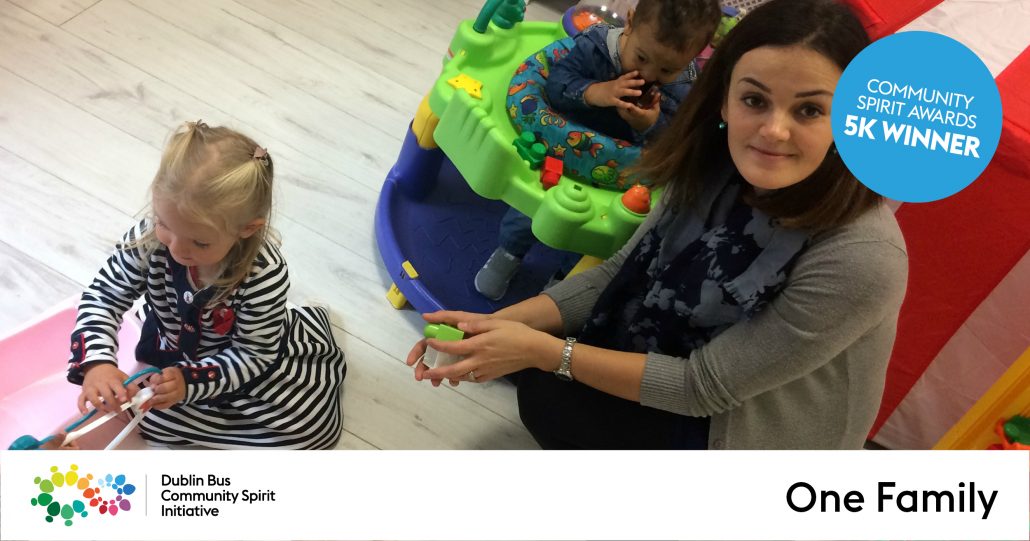
One Family is honoured to have been selected as one of five recipients of the Dublin Bus Community Spirits Awards 2017. One Family received the top award of €5,000 along with four other worthy winners: Anam Cara Parental & Sibling Bereavement Support; Darndale Belcamp Integrated Childcare Service Ltd; HalfTime Talk CLG and National Family Support Network. The Community Spirit Awards help to support the development of new projects, grow services and help raise community spirit in the local community.
These vital funds will be directed towards improving the One Family crèche and outdoor play facilities. Dublin Bus paid a visit to the crèche and you can watch a short video here
The Quarterly National Household Survey released today by the Central Statistics Office (CSO) reveals the most recent employment statistics for the period April-June (Q2) 2017. One Family has analysed the findings in relation to people who are parenting alone.
- In Q2 2017, the employment rate of lone parents (aged 15-64) was 58.5% (up 2.1% from 56.4%). This compares with 73.9 % (up 0.9% from 73.0%) for the adult members of couples without children and 76% (up 3.9% from 72.1%) for the adult members of couples with children.
- The employment rate of lone parents (aged 15-64) whose youngest child was aged 0 to 5 years was 46.8% (up 0.8% from 46.0%) in Q2 2017 compared to 59.8 % (up 2.6% from 57.2%) where the youngest child was aged 6 to 11, and 65.6% (up 9.2% from 56.4%) where the youngest child was aged 12 to 17. This indicates that, as children get older, the prohibitive costs of childcare are reduced and lone parents are more likely to engage in work.
- There were 6,400 (down 1,400 from 7,500) lone parents classified as long-term unemployed in Q2 2017, compared to 22,400 (down 12,000 from 34,400) adult members of couples with children classified as long-term unemployed in the same period.
- On average, 55.3% (up 1.2% from 54.1%) of lone parents were participating in the labour market in Q2 2017. The participation rate of males in couples with children was 87.1% (down 0.7% from 87.8%) while the corresponding participation rate for females was 64.2% (down 0.2% from 64.4%). This dispels the myth that lone parents are not engaging in, and seeking, work outside the home.
One Family remains acutely concerned about the numbers of lone parents in precarious and low-paid employment, particularly since the reform of the One-Parent Family Payment that has pushed many lone parents into employment that has kept them and their children living in poverty.
The Survey on Income and Living Conditions (SILC) 2015 results released in January 2017 showed that 58% (almost three in five) of lone parent households with one or more children experienced enforced deprivation. This compares to 25% of the general population who experienced deprivation. People in lone parent households continue to have the lowest disposable income out of all households with children in the State.
The Indecon Independent Review of the Amendments to the One-parent Family Payment since January 2012, released last Monday, showed that 63% of the respondents in full-time employment stated that they cannot afford 3+ items on the deprivation list, meaning that they are most definitely experiencing deprivation daily, and in-work poverty.
Further Quarterly National Household Survey information from the CSO is available here.
Press Release
Budget 2018: Much More Needed to Lift One-Parent Families out of Government-created Poverty
Indecon Report: Government saves €45m net but parents and children are poorer despite working
(Dublin, Tuesday 10 October 2017) One Family, Ireland’s organisation for people parenting alone, sharing parenting, and separating, acknowledges the announcement of the partial Income Disregard restoration – following previous budget cuts – from €110 to €130 per week for One Parent Family Payment (OFP) and Jobseeker’s Transition Payment (JST) recipients, the €5 weekly social welfare payment increase, and the household income threshold for FIS increase by €10 for families of up to three children, along with new housing initiatives. However, it is not enough to lift lone parents and their children out of the consistent poverty and deprivation that resulted from previous reform of the One-Parent Family Payment, and to support them in overcoming systemic barriers in accessing education and employment.
Yesterday the Department of Employment & Social Affairs released the Indecon Independent Review of the Amendments to the One-parent Family Payment since January 2012 which should have formed the basis of changes in Budget 2018 for social-welfare dependent one-parent families. Increases should have been targeted and strategic to reach the poorest children and families across the board, following the evidence and Government commitments to lift 100,000 children out of poverty.
Karen Kiernan, One Family CEO, states: “The Indecon Report is absolutely shocking – more parents are off welfare and working saving the state €45m net but more are living in poverty. There is so much work to be done to ensure that the appropriate services are in place to support people parenting alone into sustainable employment but we did not see that today. Of course, the increase to the Income Disregard is to be welcomed and will help some families. And of course, it is heartening that Government listened to us and the families we work with on this issue. But we must also ask: why have Ministers not taken action on our other recommendations? Following years of ill-advised cuts and reform that targeted lone parents, this must happen now if the poverty experienced by one-parent families in receipt of social welfare payments is to be reversed.
“What lone parents want is a fair chance, and just like all members of our society, they should have one. Lone parents want to work and to learn; they want to have the opportunity to build brighter futures for their families. But the evidence shows that one-parent families are among those who have borne the brunt of years of austerity, that they still experience proportionally higher levels of poverty than any other members of our society today, and that the systemic barriers to employment and education are still not coming down. The recommendations contained in our Pre-Budget Submission, if implemented, will help to create those fair chances.”
Valerie Maher, One Family Policy & Programmes Manager, comments: “Today’s Budget goes a small way towards supporting lone parents and their children, but so much more is needed. It is alarming to see in the Indecon report that even those working full-time following removal from social welfare are living at risk of poverty and in daily deprivation. The Government must also be concerned about these families and not only those on social welfare.
“Currently we see parents in precarious, low paid employment and this is not a victory for Government policy, or a signpost to continue unchanged in this direction, as more children in more one-parent families are living in consistent poverty.”
One Family’s Pre-Budget Submission 2018 included recommendations designed to support lone parents into education and/or employment, while acknowledging their parenting responsibilities. It can be read here.
NOTES FOR EDITORS
- One Family’s Pre-Budget Submission 2018 can be read here.
- Our response to the Indecon Report is here.
- Indecon Independent Review of the Amendments to the One-parent Family Payment since January 2012 is here.
- 1 in 4 families with children in Ireland is a one-parent family (Census 2016)
- 356,203 children lived in one parent families, representing more than one in five or 21.2% of all children in family units (Census 2016)
- The average one parent family is has 1.63 children compared to an average of 1.95 for the population overall (Census 2016)
- Of the approximately 56,000 lone parents in receipt of One Parent Family Payment (OFP) or Job Seekers Transition Payment (JST), 34,700 are not engaged in employment and so remain below the income poverty threshold (Dept. of Social Protection, January 2017)
- There are more than 14,000 One-Parent Family Payment (OFP) recipients in employment, and of 14,500 JST recipients, 5,000 recipients work. Family Income Supplement is also an important support for working parents with approximately 27,000 lone parents in receipt of the payment (Dept. of Social Protection, January 2017)
- Those living in households with one adult and one or more children aged under 18 had the highest deprivation rate in 2015 at 57.9% (Survey on Income and Living Conditions (SILC) 2015)
- 58% (almost three in five) of lone parent households with one or more children experienced enforced deprivation. This compares to 25% of the general population who experienced deprivation (SILC 2015)
- People in lone parent households continue to have the lowest disposable income out of all households with children in the State (SILC 2015)
- Individuals living in households where there was one adult and one or more children aged under 18 had the highest consistent poverty rate at 26.2%, an increase from 25% in 2014. This is compared to a consistent poverty rate of 7.7% for two-parent households (SILC 2015)
- For further facts and figures, visit onefamily.ie.
/Ends.
About One Family
One Family, founded in 1972 as Cherish, celebrates 45 years of supporting one-parent families in Ireland in 2017. It is Ireland’s leading organisation for one-parent families and people sharing parenting, or separating, offering support, information and services to all members of all one-parent families, to those sharing parenting, to those experiencing an unplanned pregnancy and to professionals working with one-parent families. Children are at the centre of One Family’s work and the organisation helps all the adults in their lives, including mums, dads, grandparents, step-parents, new partners and other siblings, offering a holistic model of specialist family support services. These services include the lo-call askonefamily national helpline on 1890 662212, counselling, and provision of training courses for parents and for professionals. One Family also promotes Family Day and presents the Family Day Festival every May, an annual celebration of the diversity of families in Ireland today (www.familyday.ie). For further information, visit www.onefamily.ie.
Available for Interview:
Karen Kiernan, One Family CEO | t: 086 850 9191
Valerie Maher, One Family Policy & Programmes Manager | t: 086 084 6826
Further Information or to arrange an interview:
Shirley Chance, Director of Communications | t: 01 662 9212 or 087 414 8511
One Family Response to the Report ‘Indecon Independent Review of the Amendments to the One-parent Family Payment since January 2012’
A long-awaited report, prepared by Indecon Research Economists on behalf of the Department of Employment Affairs and Social Protection, was released late this afternoon. It is regrettable this this important report has been made available on the evening before Budget 2018 is scheduled to be announced, as it warrants attention that it may not now receive.
Our initial analysis of the 141-page report highlights that:
- While the Exchequer saves €45m net, lone parents and their children are poorer as a result of the recent reform of the One Parent Family Payment (OFP).
- It is an in-depth report yet no recommendations and only short conclusions are offered.
- Can any report guarantee accuracy if some of the survey questions from which the data is drawn provided only positive response options?
- Where is the recognition of the parenting responsibilities of lone parents? One Family is shocked that childcare appears to be mentioned only twice.
- Where too is the recognition of the impacts of the fear, stress, and uncertainty placed on lone parents and their children as a result of this reform; and the lack of clarity in its communication and implementation? 43% of parents reported that their family wellbeing decreased due to the reform and 40% said their children’s wellbeing decreased.
- There is no indication that the marginal increases in employment will have any longevity given the precarious and low paid nature of these employments, and 53% of survey respondents stated that the OFP reforms resulted in being financially worse off. Only 20% noted an improvement.
- 63% of the respondents in full-time employment stated that they cannot afford 3+ items on the deprivation list, meaning that they are most definitely experiencing deprivation daily, and in-work poverty.
- There is no acknowledgment that lone parents in education and in receipt of OFP or Job Seekers Transition Payment (JST) and rent support cannot avail of the SUSI maintenance grant.
The report acknowledges that “a potential concern is that many of those who lost OFP remain unemployed or in low paid or part-time employment” and that “a key challenge for policymakers is to assist lone parents to become more integrated into the Irish labour market.”
One Family’s Pre-Budget Submission includes recommendations that would enable Government to achieve this. The failure of the reform of the OFP means that it is essential that Minister Doherty engage with these recommendations.
They include:
- Full restoration of the Income Disregard.
- Allow BTEA and SUSI maintenance to be payable together, targeting those most distant from the labour market.
- Increased CDAQCI for older children and poorer families.
- Target employability supports for lone parents.
- It is also essential that, as we have consistently called for, the Department’s Case Officers receive training to support lone parents appropriately and in recognition of their lived realities.
One Family’s Pre-Budget Submission can be read here.
The Indecon report can be read here.
Valerie Maher, our Policy & Programmes Manager, writes about some of our recent policy work.
The One Family Policy Service has been focussed on pre Budget preparations over the past few weeks in advance of the Budget 2018 announcement tomorrow, Tuesday October 10th. We are anticipating the release of a report by Indecon Economic Consultants commissioned by Government to examine the impact of austerity measures on one-parent families which you can read more about in our recent press release.
We have written to a number of Government Ministers emphasising the need to take affirmative action in Budget 2018 to alleviate the disproportionate levels of poverty and deprivation being experienced by lone parents and calling on them to carefully consider the recommendations contained in our Pre-Budget Submission and a number of other key reports published over the past 12 months including the Joint Oireachtas Committee on Social Protection report in June on The Position of Lone Parents in Ireland; Maynooth University’s research on the barriers to education for lone parents published in August; and Lone Parents and Activation, What Works and Why: A Review of the International Evidence in the Irish Context, commissioned by the Department of Social Protection and conducted by Dr Michelle Millar and Dr Rosemary Crosse of the UNESCO Child & Family Research Centre in NUI Galway, published last September.
One Family has also made a number of important policy submissions during September. We made a submission to the Courts Service on their Strategic Plan 2017-2020, highlighting the challenges facing families accessing the private family law courts. We also had the opportunity to make a submission to the Law Reform Commission on possible areas of law to be considered for inclusion in the new Programme of Law Reform. We specifically addressed the issue of child maintenance, including its underpinning legal framework, and the impact of the current system on separated parents and their children. Our key recommendation is to establish a statutory Child Maintenance Service in Ireland – you can read the submission in full here.
Finally, we have made an informal submission to the Department of Justice & Equality in relation to the work they are undertaking to regulate the ‘Child’s Views’ Experts as outlined in the Children & Family Relationships Act 2015. One Family are acutely aware of the challenges facing families accessing the private family law courts and the need to ensure that accurate representations of the experiences and wishes of children are captured.
One Family sits on the National Advisory Council on Children and Young People which was set up to ensure the implementation of Better Outcomes, Brighter Futures: The National Policy Framework for Children and Young People 2014-2020. The third annual report of the National Advisory Council was recently published. One Family have worked closely with both statutory and non-governmental (NGO) representatives, to ensure that child poverty targets remain at the forefront of Government policy and decision making. Our contributions to a joint NGO submission on reducing child poverty has resulted in an increase in income disregards for lone parents in receipt of One-Parent Family Payment and Jobseeker’s Transition and we will continue to work with Government to ensure they meet their commitment to lift over 100,000 children out of poverty by 2020.
Press Release
Government Must Use the Evidence –
Another New Report Confirms Increased Poverty in One-Parent Families
(Dublin, Monday 2 October 2017) One Family – Ireland’s organisation for people parenting alone and sharing parenting – responds to the news that a report by Indecon Economic Consultants commissioned by Government to examine the impact of austerity measures on one-parent families confirms what One Family has been saying for years; lone parents and their children who are reliant on social welfare are suffering more since Governmental reform and cuts of the One-Parent Family Payment (OFP) introduced in Budget 2012.
Karen Kiernan, One Family CEO, explains: “Media coverage of the forthcoming research confirms what One Family has been saying for the past five years – the cuts since Budget 2012 were counter-productive, have led to increased child poverty in one-parent families, and must be fully reversed. Government needs to face the facts and respond effectively in this year’s Budget.
“The evidence is piling up showing that lone parents and their children have been damaged by the Budget 2012 cuts including the Joint Oireachtas Committee on Social Protection report in June on The Position of Lone Parents in Ireland; Maynooth University’s research on the barriers to education for lone parents published in August; and Lone Parents and Activation, What Works and Why: A Review of the International Evidence in the Irish Context, commissioned by the Department of Social Protection and conducted by Dr Michelle Millar and Dr Rosemary Crosse of the UNESCO Child & Family Research Centre in NUI Galway, published last September. Each of these reports provides a clear pathway of what is needed.”
The new Indecon report is based on a national survey of 34,000 one-parent families which began in April and is focussed on “the financial, social, poverty, and welfare dependency impacts” caused by cuts and reforms. It was specifically tasked with providing an overview of the impact of these changes to the One-Parent Family Payment and associated social welfare cuts.
Karen continues: “It is not acceptable to ignore vulnerable children and families. Politicians must do their job and follow the evidence. The Government has committed to lifting 100,000 children out of poverty and must use the resources available to them to achieve this. Most poor children live in one-parent families and their childhoods have been hit hard by cuts in recent years. Now there is an opportunity to invest appropriately and to ensure that lone parents can afford to work, can afford to access education, and can afford to feed their families.”
Valerie Maher, One Family Policy & Programmes Manager, states: “There is an extensive submission by leading Irish NGOs in association with Better Outcomes Brighter Futures – the National Strategy for Children and Young People outlining how the Government can reach its target of reducing child poverty rates in Ireland. As detailed in our Pre-Budget Submission for 2018, this is where the focus needs to be ensuring that work pays for lone parents on social welfare by reinstating the income disregard; ensuring that they can access education irrespective of their housing tenure; and focussing payments on the most vulnerable children and young people. The future for these children depends on what actions Government takes now.”
Notes and Links for Editors
- One Family’s Pre-Budget Submission
- Houses of the Oireachtas Report of the Joint Committee on Social Protection Report on the Position of Lone Parents in Ireland June 2017
- An Independent Review to Identify the Supports and Barriers for Lone Parents in Accessing Higher Education and to Examine Measures to Increase Participation
- Lone Parents and Activation, What Works and Why: A Review of the International Evidence in the Irish Context
- SILC (2014) statistics on onefamily.ie: 59% (almost three in five) of lone parent households with one or more children experienced enforced deprivation. Individuals living in households where there was one adult and one or more children aged under 18 had the highest consistent poverty rate at 26.2%, an increase from 25% in 2014. This is compared to a consistent poverty rate of 7.7% for two-parent households, meaning that lone parents and their children are almost four times more likely to be living in consistent poverty compared to two-parent households.
/Ends.
About One Family One Family was founded in 1972 as Cherish and celebrates its 45th year in 2017 when the organisation will also relocate to Smithfield, Dublin 7. It is Ireland’s leading organisation for one-parent families and people sharing parenting, or separating, offering support, information and services to all members of all one-parent families, to those sharing parenting, to those experiencing an unplanned pregnancy and to professionals working with one-parent families. Children are at the centre of One Family’s work and the organisation helps all the adults in their lives, including mums, dads, grandparents, step-parents, new partners and other siblings, offering a holistic model of specialist family support services.
These services include the lo-call askonefamily national helpline on 1890 662212, counselling, and provision of training courses for parents and for professionals. One Family also promotes Family Day every May, an annual celebration of the diversity of families in Ireland today (www.familyday.ie).
For further information, visit www.onefamily.ie.
Available for Interview
Karen Kiernan, CEO | t: 01 662 9212 or 086 850 9191
Valerie Maher, Policy & Programmes Manager | t: 01 662 9212 or 086 084 6826
Further Information/Scheduling
Shirley Chance, Director of Communications | t: 01 622 9212 or 087 414 8511
The Department of Education has today issued a review completed by academics at Maynooth University which sought to identify the barriers lone parents face in accessing higher level education. The review also examined the trends in participation and completion rates by lone parents in higher education and the range of measures that are currently available to support lone parents. One Family was consulted as part of this process as a representative stakeholder group.
The recommendations of the Report echo One Family’s recent Pre-Budget Submission. Lone parents need additional supports that recognise their parenting responsibilities in order to access educational opportunities.
A summary of the key findings from the report is below:
- Lone parents have attracted considerable policy attention in welfare and education and training, but much less specific attention has been paid to lone parents in higher education and seeking to widen access for these families.
- Key areas of social policy which are impacting on access to education include One Parent Family Payment (OFP) reform, housing, and childcare policy.
- Some lone parents are likely to experience considerable challenges in meeting the costs of attending college, paying rent, raising a family, working, and paying for childcare. These financial constraints are likely to influence decision-making around attending higher education either on a part-time or full-time basis.
- While the maintenance portion of SUSI education grants only provides a contribution towards the costs of participating in education, because lone parents have higher living costs than school leavers, the efficacy of the student grant is limited further.
- The complexity of the current system of supports was also highlighted in the report, including the inadequate dissemination of information, guidance and awareness raising to lone parents regarding the ‘bundles’ of supports that are offered by different government departments and agencies. Intreo case workers also require more training and awareness in this area.
Based on these findings the following recommendations have been made to Government to increase lone parents’ participation in education at third level:
- The maintenance grant contribution by SUSI must be reviewed and increased for all students, and particularly for lone parents.
- Lone parents who have transferred to BTEA were highlighted as the most economically vulnerable group among lone parent welfare recipients. The re-instatement of the student grant scheme – maintenance grant – for this group would create a more equitable, less complicated and targeted approach for supporting lone parents in higher education.
- Meeting the needs of lone parents should be part of the ethos of each Higher Education Institutions (HEI). This needs to be very explicitly stated by colleges and universities who have the responsibility of welcoming lone parents into its campus and giving them the tools and supports to succeed.
- Provide additional funding for lone parents either in the form of cash transfers or in the form of universal scholarships for lone parents within HEIs
- Measures introduced under the proposed Affordable Childcare Scheme should be articulated in a clear and meaningful way to lone parents, HEIs, lone parent representative groups and Intreo case workers. It is also important that all lone parents, irrespective of welfare entitlements, or if they are studying part-time or full-time have access to supported childcare.
The full report ‘An Independent Review to Identify the Supports and Barriers for Lone Parents in Accessing Higher Education and to Examine Measures to Increase Participation’ is available here.
Following publication of the report, the Minister for Education and Skills, Richard Bruton, TD, and the Minister of State for Higher Education, Mary Mitchell O’Connor, TD, have announced €16.5m for new initiatives to widen access to higher education over the next three years, and declared a focus on helping lone parents to access higher level education.
The initiatives, according to the Department of Education and Skills, are:
- Funding bursaries worth €5,000 for 600 students coming from non-traditional backgrounds into college, with support for at least 120 socio-economically disadvantaged lone parents. This will be a €6m regional call over three years.
- Funding for support programmes to help 2,000 students, of which 200 will be lone parents, from non-traditional backgrounds enter college and successfully complete their course. This will be a €7.5m regional call over three years.
- A further €3m over three years in increased funding for the hardship supports to help students, with lone parents being prioritised.
- The groups being targeted include: entrants from under-represented socio-economic groups and communities; entrants with disabilities; mature entrants; members of the Irish Traveller community; students entering on the basis of a further education award; part-time flexible learners; as well as socio-economically disadvantaged lone parents and ethnic minorities.
While these initiatives are to be welcomed, we call on Government to take further action on the recommendations contained in this comprehensive Report and in our Pre-Budget Submission, and to ensure that appropriate budgetary decisions are made in the coming weeks to support these measures.
Last month, after over forty years in Cherish House on Lower Pembroke Street, One Family moved to new premises in Smithfield, Dublin 7 to more fully meet the need of parents and children as demand for our supports and services continues to grow. While looking forward to the move and to welcoming clients to the new building, everyone who has lived, worked or visited Cherish House over the decades has been moved by the story of the building, by its history and by the memories it holds.
Just before moving, our founding member Maura O’Dea Higgins and some of One Family’s staff team spoke with producer Judy-Meg Ní Chinnéide about Cherish House. Maura recalls trying to find other women who were lone parents in 1970s Ireland, how the organisation came into being in Cherish House, and the early days of meetings by firelight when there was no electricity. Staff shared what the building and its people have meant to us and to the families who lived here when they had nowhere else to go, and how will we carry those memories with us into the future.
Listen to the podcast on the link below (7.5 minutes duration). We hope you enjoy it.
Music credit: Søren Nissen Jørgensen.
The music on this podcast is shared under a Creative Commons license by its composer Søren Nissen Jørgensen.
Ahead of the annual Pre-Budget Forum taking place today, One Family joined with Barnardos, Children’s Rights Alliance, National Youth Council of Ireland and the Society of Saint Vincent de Paul to call on Government to ensure Budget 2018 includes key provisions to tackle child poverty as we are deeply concerned that one in nine children in Ireland remain in consistent poverty. We believe not enough is being done to remedy this. You can read our jointly issued press release here.
 One Family’s Pre-Budget Submission 2018 targets child poverty as, according to SILC (2008-2015), children in one-parent households are almost four times more likely to live in consistent poverty than those in two-parent households. Our Submission also focuses on in-work supports to make work pay. Reforms of the One-Parent family Payment (OFP) have resulted in only marginal increases in employment rates for some one-parent families, a reduction in employment for those children over 12, and higher rates and child poverty and deprivation in these families. The other areas we focus on are:
- Housing & Homelessness,
- Access to Education & Training,
- Early Years, Out-of-School and Afterschool Childcare, and
- Family Law Courts Reform.
You can read our Pre-Budget Submission 2018, which includes our analysis and recommendations, on this link.
#EndChildPoverty
#MakeWorkPay
#Budget2018
Press Release
Budget 2018 will be a litmus test of Taoiseach’s commitment to lift 100,000 children out of poverty
Dublin, 21st July 2017 Leading NGOs in Ireland have joined voices ahead of the annual Pre-Budget Forum taking place on Friday the 21st July to call on the Government to ensure Budget 2018 includes key provisions to tackle child poverty. Barnardos, Children’s Rights Alliance, National Youth Council of Ireland, One Family and the Society of Saint Vincent de Paul are deeply concerned that one in nine children remain in consistent poverty and believe not enough is being done to remedy this.
“We welcome that An Taoiseach, Leo Varadkar has made a clear public commitment that lifting 100,000 children out of consistent poverty will be a priority for him. This Government target provides a clear goal to work towards and to track progress against. Budget 2018 presents an ideal opportunity for An Taoiseach to demonstrate his commitment to children.” said Tanya Ward, Chief Executive, Children’s Rights Alliance.
The group has compiled a report outlining a clear roadmap of practical solutions that would make a real positive difference in children’s lives. The group believe a combination of adequate income supports and investment in quality public services is central to reducing child poverty.
Karen Kiernan, CEO, One Family said “It is particularly important to understand where the poorest children in Ireland live and to provide targeted supports. Children living in one-parent families are 3.5 times more likely to be poor than children in two parent families, and these are families who have been hit hard by Budget cuts and reforms in recent years.”
Government investment in quality early years services makes good sense. Yet Ireland continues to seriously lag behind internationally in levels of investment.
Tanya Ward, CEO, Children’s Rights Alliance said “Poverty can destroy a child’s life. Making childcare affordable is a route out of poverty because it helps children to learn and supports parents to work. Budget 2018 must invest in childcare so families can better afford it, services can improve in quality, and every child can reach their potential – not be stuck in a poverty trap.”
Succeeding in education unlocks children’s potential and enables them to escape poverty. However, participation in the education system comes at cost that pushes many families into debt.
June Tinsley, Head of Advocacy, Barnardos said “Access to free primary education is a right for all children and it can be realised for as little as €103m per annum, just €185 per pupil. This would cover the costs of books, classroom resources, remove transport fees and voluntary contributions and raise the capitation rates back to 2010 levels.”
The housing crisis continues to escalate with nearly 2,800 homeless children, as well as those living in insecure, overcrowded and unsuitable accommodation.
Hazel O’Byrne, Head of Social Justice and Policy, St. Vincent de Paul commented “Access to secure, long-term accommodation is the solution for these families and that can best be provided through increased investment to build and acquire additional social housing. Until this is available, flexibility to increase the rates of HAP and Rent Supplement can help to prevent further families becoming homeless.”
Having a long term approach to investing in services rather than annual Budgetary cycles will prove more beneficial in building a more sustainable equitable society for our children.
Mary Cunningham, Director of the National Youth Council of Ireland said “Progress on reducing child poverty rates requires long-term and strategic investment in services and supports. Increased investment in Budget 2018 in services, such the School Meals Programme and Youth Work, is crucial. Investment in these services will make a real difference in the lives of children and young people in the long-term.”
It is essential Budget 2018 shows clear political commitment and investment in implementing Better Outcomes, Brighter Futures and specifically actions that will reduce child poverty. Condemning 139,000 children to grow up in poverty is not a legacy to be proud of.
ENDS
Notes to Editor:
Link to NGO Submission on Actions to Achieve Child Poverty Target (November 2016)
Consistent poverty: proportion of people from those with an income below a certain threshold (less than 60% of median income / €230 per week), who are deprived of two or more goods or services considered essential for a basic standard of living (e.g. a warm waterproof overcoat, an adequately warm home) .
Contact:
Barnardos: June Tinsley, Head of Advocacy: 087 9955076
Children’s Rights Alliance: Tanya Ward, CEO: 087 6531069
National Youth Council of Ireland: Mary Cunningham, Director: 087 2385977
One Family: Karen Kiernan, CEO, 086 8509191
Society of Saint Vincent de Paul: Hazel O’Byrne, Head of Social Justice and Policy: 085 8010308
Yesterday was an emotional day for us and our guests who joined us for our Open Day, and for our evening Reception, as we wish farewell to our beloved home for over 40 years, Cherish House, in advance of our move to Smithfield next month and also celebrate 45 years since the founding of Cherish/One Family.

Our first President, Mary Robinson and our current president, Mary Henry, joined our founders, Board members, current and past staff, clients, friends and colleagues to view an exhibition, “Letters from our Mothers”. It features a selection of letters we received from women all over the country who were pregnant or mothers and unmarried, and their mothers, throughout the 1970s.
It was wonderful that women who lived in Cherish House from the 80s up to 12 years ago with their babies returned home accompanied by those same babies, now adults, to share photos and memories across the decades.
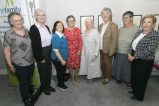 We celebrated our journey and acknowledged all that we have achieved since we formed in 1972, including the abolition of the status of illegitimacy and the introduction of the One Parent Family Payment. We remembered friends and colleagues central to that journey who we have lost. We committed to continue our work towards a society where all children are cherished equally, where all families are recognised, where lone parents are valued, and where no child suffers as a result of poverty.
Most of all, we celebrated our founders whose spirit, grit and sheer humour inspire us every day!
We thank our founders. We thank Sinéad Gibney for her powerful performance of her poem that captures the truth of being a lone parent, Enda Reilly for the beautiful music, and everyone who joined us throughout the day yesterday to give our wonderful building the farewell it deserved. Thank you to FX Buckley Steakhouses who supported our celebration with provision of wonderful food and wine, and their great staff team.
We look forward to being able to provide more services to parents and their children in our new premises in Coke Lane, Smithfield, Dublin 7 when we open our doors there on Tuesday 1 August 2017.
A photo album from our Farewell and 45th celebration can be enjoyed on this link.
Press Release
Cherish/One Family Celebrates 45 Years of Achievement for Lone Parents Including Abolition of Status of Illegitimacy
Reiterates that Government Action is Needed Now to Stop Rising Rates of Child Poverty
Organisation moves to Smithfield, Dublin 7 in July
(Dublin, Tuesday 27 June 2017) One Family – Ireland’s organisation for people parenting alone and sharing parenting – celebrates its 45th anniversary in 2017. One Family was founded as Cherish in 1972. In that year, Maura O’Dea Richards placed an ad in the paper in the hope of reaching other women who were unmarried with children. A small group of brave, determined women soon banded together and went on to provide supports and services and to campaign for change despite widespread societal resistance. One Family relocates to a more accessible and larger building in Smithfield, Dublin 7 in July to be able to offer services to more parents and children in one-parent families.
Two of the organisation’s most significant achievements were the introduction of the unmarried mother’s allowance in 1973, as the One Parent Family Payment was then called, and the abolition of the status of illegitimacy in 1987. This work has continued and expanded. A name change to One Family in 2004 recognised the new diversity of family forms headed by one parent. Today, while society has progressed, many of the same barriers that must be overcome by people parenting alone as they attempt to access employment and education remain; and the Constitution, far removed from the reality for today’s families, still only recognises the married family form.
Karen Kiernan, One Family CEO, comments: “Tomorrow we will also release our Annual Review for 2016, highlighting that child poverty rates continue to increase and that one-parent families remain those most at risk of consistent deprivation. This is a direct result of the barriers that prevent people who parent alone from accessing sustainable employment and education opportunities, such as lack of affordable childcare and secure housing. We saw an increase in 2016 of clients becoming, and at risk of, homelessness. We also saw a significant increase in calls to our askonefamily helpline from parents who are separating, particularly in requests for supports for children experiencing parental separation.
Karen continues: “We are proud to celebrate our 45th year and all that has been achieved to date. Our history inspires us to never give up. We will continue to fight to ensure that Government takes urgent, real action to stop the rising rates of child poverty in Ireland today and to ensure provision of the services and supports that lone parents and separating parents and their children need.”
Tomorrow, Wednesday 28 June, Cherish House and its decades of history will be celebrated with an exhibition featuring photographs, documents, letters and other items from One Family’s archives. An Open Door Day runs from 10am-4pm and members of the public with connections to Cherish/One Family are invited to visit 2 Lower Pembroke Street, Dublin 2 to share their memories of Cherish House.
One Family’s Annual Review 2016 is available to read here.
One Family is fundraising for refurbishment of its new headquarters in Smithfield.
/Ends.
About One Family One Family was founded in 1972 as Cherish and celebrates its 45th year in 2017 when the organisation will also relocate to Smithfield, Dublin 7. It is Ireland’s leading organisation for one-parent families and people sharing parenting, or separating, offering support, information and services to all members of all one-parent families, to those sharing parenting, to those experiencing an unplanned pregnancy and to professionals working with one-parent families. Children are at the centre of One Family’s work and the organisation helps all the adults in their lives, including mums, dads, grandparents, step-parents, new partners and other siblings, offering a holistic model of specialist family support services.
These services include the lo-call askonefamily national helpline on 1890 662212, counselling, and provision of training courses for parents and for professionals. One Family also promotes Family Day every May, an annual celebration of the diversity of families in Ireland today (www.familyday.ie).
For further information, visit www.onefamily.ie.
Available for Interview
Karen Kiernan, CEO | t: 01 662 9212 or 086 850 9191
Valerie Maher, Policy & Programmes Manager | t: 01 662 9212
Further Information/Scheduling
Shirley Chance, Director of Communications | t: 01 622 9212 or 087 414 8511
Press Release
New Report Calls on State to Support One-Parent Families to Escape Poverty
And Cites a Decade of One Family’s Research and Policy Work
(Dublin, Friday 16 June 2017) One Family – Ireland’s organisation for people parenting alone and sharing parenting – responds to a report by the Joint Oireachtas Committee on Social Protection on the Position of Lone Parents in Ireland which formed a significant part of the Committee’s Work Programme for the last twelve months. It includes a series of proposals to help alleviate the difficulties often faced by those parenting alone or sharing parenting, most of which refer to One Family’s research, presentations to the Committee, and Pre-Budget Submissions over the past decade.
The report cites research completed by One Family in 2008 which sought to examine the barriers to employment faced by the families we represent. The report also references throughout the extensive analyses undertaken by One Family in advance of, and subsequent to, the reforms to the One-Parent Family Payment (OFP) announced in Budget 2012, including case studies which highlighted the direct experience of many parents who were impacted by the reforms.
Karen Kiernan, One Family CEO, comments: “It is heartening that the voices of lone parents have been heard by the Committee through our continued, determined representation. One Family most recently presented to the Joint Oireachtas Committee in January 2017 where we spoke about the multiple challenges and barriers that lone parents often face in accessing education or work. The Committee have reiterated and supported what One Family has evidenced in policy work and submissions for the past decade; the main challenges facing lone parents are child poverty, housing costs, availability of affordable childcare, obtaining child maintenance payments, job activation, access to education and changes to the One-Parent Family Payment (OFP). We will continue to fight for the voices of people parenting alone to be heard, and to call for urgent implementation of the proposals of the Committee.”
Valerie Maher, One Family Policy & Programmes Manager, states: “Lone parents have waited long enough. Action is needed to ensure that Government provide a range of measures – including, but not confined to, housing support, childcare access, educational prospects and in-work supports – to empower one-parent families to break free from long-term deprivation and poverty. We acknowledge the extensive work which has gone into the compilation of this report. The next step is ensuring that Budget 2018, and beyond, contains significant measures which can resource these recommendations and make them a reality. In particular, we support the Committee’s recommendations to broaden access to, and increase supports available to those in receipt of, Job Seeker’s Transition (JST) and the call for the establishment of a state body to seek and pursue maintenance payments.”
The full report is available to read on this link.
/Ends.
About One Family One Family was founded in 1972 as Cherish and celebrates its 45th year in 2017 when the organisation will also relocate to Smithfield, Dublin 7. It is Ireland’s leading organisation for one-parent families and people sharing parenting, or separating, offering support, information and services to all members of all one-parent families, to those sharing parenting, to those experiencing an unplanned pregnancy and to professionals working with one-parent families. Children are at the centre of One Family’s work and the organisation helps all the adults in their lives, including mums, dads, grandparents, step-parents, new partners and other siblings, offering a holistic model of specialist family support services.
These services include the lo-call askonefamily national helpline on 1890 662212, counselling, and provision of training courses for parents and for professionals. One Family also promotes Family Day every May, an annual celebration of the diversity of families in Ireland today (www.familyday.ie).
For further information, visit www.onefamily.ie.
Available for Interview
Karen Kiernan, CEO | t: 01 662 9212 or 086 850 9191
Valerie Maher, Policy & Programmes Manager | t: 01 662 9212 or 086 084 6826
Further Information/Scheduling
Shirley Chance, Director of Communications | t: 01 622 9212 or 087 414 8511
One Family welcomes the 25% increase in the Back to School Clothing & Footwear Allowance (BTSCFA) for children announced by Taoiseach Leo Varadkar yesterday as outgoing Minister for Social Protection.
One Family called for an increase in the Allowance as part of our joint NGO Submission on Child Poverty and in our 2017 Pre- Budget Submission. This increase will make a difference to one-parent families on low incomes who struggle to meet high back to school costs for their children. We hope that the incoming Taoiseach will continue to take affirmative steps in ensuring that government meets its target to lift over 100,000 children out of consistent poverty by 2020.
Information about the Allowance, including how to apply, is available here on the Citizen’s Information website. It is now open for 2017 with a closing date for applications of 30 September 2017.
One Family welcomes the launch of a document on child poverty that puts forward real solutions to Government to end child poverty in all its forms. Developed under the auspices of the National Advisory Council on Children and Young People by a subgroup of members including One Family, it offers recommendations that can help Government to meet their commitment to lift 97,000 children out of poverty by 2020.
Recent statistics from the Survey on Income and Living Conditions (SILC 2015) showed that children living in one-parent families had the highest consistent poverty rate at 26.2%, an increase from 25% in 2014. This is compared to a consistent poverty rate of 7.7% for two-parent households. This means that children living in these households are almost four times more likely to be experiencing consistent poverty on a daily basis.
Consistent poverty means that children are living in households with incomes below €229 per week and experiencing deprivation such as not being able to replace worn shoes and going without heating through lack of money.
 This paper recommends changes across a range of State services including health, education, social protection and family services.
From its outset, the National Advisory Council on Children and Young People has identified child poverty as the single biggest concern that impacts across all aspects of children’s lives, denies them their rights, and limits their life chances in many ways. In October 2015, a child poverty subgroup was established under the auspices of the Advisory Council under Better Outcomes, Brighter Futures. The subgroup comprises both statutory and non-governmental (NGO) representatives, including One Family, and was co-convened by the Department of Social Protection and the Children’s Rights Alliance.
The NGO representatives on this subgroup – Barnardos, the Children’s Rights Alliance, the National Youth Council of Ireland, One Family and the Society of St. Vincent de Paul – have developed this paper to inform the whole of Government approach to tackling the number of children in consistent poverty.
While the Better Outcomes, Brighter Futures Policy Framework includes an ambitious target to reduce the incidence of child poverty by 2020, the reality is that the situation is getting worse, not better. Therefore, the Advisory Council believes that there is a need for both statutory and non-statutory bodies to redouble their efforts towards the reversal of this negative trend. This new paper will contribute to this aim.
You can read the paper here.
Press Release
Creative Family Fun at Smithfield Square
Annual Family Day Festival celebrates family diversity in Ireland today.
Family Day Festival | Saturday 27 May 2017 | www.familyday.ie
(Dublin, Monday 8th May 2017) One Family – Ireland’s organisation for people parenting alone, sharing parenting and separating – celebrates the wonderful diversity of families in Ireland with its seventh annual Family Day Festival taking place on Saturday 27 May from 1-5pm in Smithfield Square, Dublin 7. From our new location, in the historic hub of Smithfield, we welcome all families to join us for a host of free fun and festivities including workshops, magic, comedy, art, games, storytelling and lots more besides.
Karen Kiernan, One Family CEO, comments: “We want Family Day to be as well recognised and celebrated as Mother’s Day and Father’s Day, in this, One Family’s 45th year since we were founded as Cherish in 1972. We want children to look forward to Family Day as a time when they feel beloved, understood and respected. Family Day is for all children – whether living in a one-parent family; married family; with unmarried parents; with same-sex parents; a foster family; extended family or friends; or any of the myriad family forms in society – so they can know that their family is valued and included.”
This year One Family has teamed up with world-famous animation studio, Brown Bag Films, best known for Doc McStuffins and the Oscar nominated Give Up Yer Aul Sins, for a series of workshops at their headquarters in Smithfield Square. Elsewhere, up-top on the vintage bus, there will be film screenings, puppet shows and music workshops. After a jam-packed day of fun, the 50-member Dublin Ukulele Collective will play us out with their rhythmic take on classic hits with audience participation encouraged.
Karen further comments: “We created Family Day nearly a decade ago to help raise awareness of how family diversity is a positive thing for society. We still have a lot of work to do as our Constitution does not yet acknowledge this reality, and many of the families we work with are struggling more than ever. But Family Day is one day we can all get together, celebrate all family forms and simply have fun.”
Following on from last’s years Biggest Family Tree, in which over 500 children decorated our specially crafted wooden tree, this year we once again invite children to create Ireland’s Biggest Family Tree. Children can draw a portrait of their own family on our leaf template which can be downloaded from www.familyday.ie. These leaves will be combined and displayed on our Biggest Family Tree at Family Day on Saturday 27 May.
One Family gratefully acknowledges Dublin City Council for their support of Family Day 2017. Full event information is on www.familyday.ie
IRELAND’S BIGGEST FAMILY TREE
Be part of Ireland’s Biggest Family Tree!
Ireland’s Biggest Family Tree will be created on Saturday 27 in Smithfield Square. Children nationwide can be part of it. Families come in all shapes and sizes and everyone should have pride in their family form. All families matter and all families are equal.
Download the Biggest Family Tree Leaf here:
http://www.familyday.ie/wp-content/uploads/family_day_leaf_2016.pdf
TICKETS
Limited places available for Brown Bag Film workshops. Pre-booking required. Available from Thursday 11 May at www.familyday.ie.
LISTINGS
Saturday 27 May | Family Day Festival presented by One Family in celebration of family diversity | Family-friendly fun for all ages: workshops, magic, music, games, comedy, story-telling, arts & crafts, and lots more! | Smithfield Square | 1-5pm | FREE | www.familyday.ie / 01 662 9212
/Ends.
About One Family
One Family was founded in 1972 as Cherish and is Ireland’s leading organisation for one-parent families and people sharing parenting or separating, offering support, information and services to all members of all one-parent families, to those sharing parenting, to those experiencing an unplanned pregnancy and to professionals working with one-parent families. Children are at the centre of One Family’s work and the organisation helps all the adults in their lives, including mums, dads, grandparents, step-parents, new partners and other siblings, offering a holistic model of specialist family support services. These services include the lo-call askonefamily national helpline on 1890 66 22 12, counselling, and provision of training courses for parents and for professionals. One Family also promotes Family Day and presents the Family Day Festival every May, an annual celebration of the diversity of families in Ireland today (www.familyday.ie). For further information, visit www.onefamily.ie.
Available for Interview
Karen Kiernan, CEO | t: 01 662 9212 or 086 850 9191
Further Information and Images
Shirley Chance, Director of Communications | t: 01 662 9212 or 087 414 8511
Jane Farrell, Communications & Marketing Officer | t: 01 662 9096 or 087 623 0166
Press Release
Census 2016 Shows Increase in One-Parent Family Households and in People who are Divorced Reflecting the Real Diversity of Families in Today’s Modern Ireland
Government must step up with policies and services
(Dublin, Thursday 6th April 2017) One Family – Ireland’s organisation for people parenting alone, sharing parenting, and separating – responds to the latest Census 2016 figures released today by the Central Statistics Office (CSO).
The Census shows that there were 218,817 families in Ireland headed by one parent in 2016; an increase of over 3,500 families since Census 2011. The vast majority, 86.4%, were headed by women. Almost 90,000 of these parents indicated that they were single; a further 50,496 were widowed; and the remaining 68,378 were separated or divorced. Nationally, the number of divorced people in Ireland has increased from 87,770 in 2011 to 103,895 in 2016, an increase of 16,125 persons. This is an increase of over 44,000 people in the last ten years. In contrast, the number of people identifying as separated has levelled off and stood at 118,178. This is up marginally from 116,194 five years earlier.
One Family CEO Karen Kiernan comments: “There has been a 1.2% increase in the number of children living in one parent families with almost 1 in 5 children in Ireland (19.5%) now living in a one-parent family. This reflects the evidence that we have from working with families, from listening to them, and understanding their lived realities. It shows that family form is not, and has never been, static. However, services and policies are very often static, and do not reflect the reality of family diversity. Families are left without the supports they need. Lack of supports to separate well, lack of anti poverty measures and lack of mediation services around the country are clear examples of this gap. Government must look at new inter-departmental approaches if it is serious about fixing this problem, and working towards a society where all families are equally cared for and enabled to contribute.”
One Family Policy & Programmes manager, Valerie Maher, comments: “As divorce in Ireland generally requires a period of separation in the first instance, up to five years, the figures reflect both a progression for people from separation to divorce, combined with more people becoming separated. A Private Members Bill reducing the mandated waiting period to initiate divorce proceedings from four years to two is being debated before the Dáil today. We launched the results of Ireland’s First National Shared Parenting Survey in January. Over 1,000 women and men told us what is needed to support them and their children. Government must listen to their voices now, and implement our policy recommendations to ensure that separating parents are supported to keep children at the centre of parenting, thus ensuring better outcomes for all members of the family.”
Census findings reflect what One Family has been saying for years: Ireland’s families come in all shapes and sizes. Further information and analysis on families will be released in June this year. It is time for Government and society to embrace this wonderful diversity.
Notes for Editors
- CSO Census findings can be accessed here.
- One Family’s report, Ireland’s First National Shared Parenting Survey: Results & Recommendations, can be accessed here.
/Ends.
About One Family
One Family was founded in 1972 as Cherish and celebrates its 45th year in 2017. It is Ireland’s leading organisation for one-parent families and people sharing parenting, or separating, offering support, information and services to all members of all one-parent families, to those sharing parenting, to those experiencing an unplanned pregnancy and to professionals working with one-parent families. Children are at the centre of One Family’s work and the organisation helps all the adults in their lives, including mums, dads, grandparents, step-parents, new partners and other siblings, offering a holistic model of specialist family support services.
These services include the lo-call askonefamily national helpline on 1890 662212, counselling, and provision of training courses for parents and for professionals. One Family also promotes Family Day every May, an annual celebration of the diversity of families in Ireland today (www.familyday.ie).
One Family launched the results of Ireland’s first national Shared Parenting Survey. The full report can be read here.
For further information, visit www.onefamily.ie.
Available for Interview
Karen Kiernan, CEO | t: 01 662 9212 or 086 850 9191
Valerie Maher, Policy & Programmes Manager | t: 01 662 9212
Further Information/Scheduling
Shirley Chance, Director of Communications | t: 01 622 9212 or 087 414 8511
 The United Nations Convention on the Elimination of All Forms of Discrimination Against Women (CEDAW) is an international human rights treaty which is often described as a bill of rights for women.
CEDAW sets out what governments must do to improve the situation of women living in the country, including addressing gender stereotyping and violence against women, promotion of gender equality in public life and protection of women’s rights to education, health and employment.
By ratifying CEDAW in 1985, Ireland agreed to take concrete steps to end gender-based discrimination and improve the situation of all women living here.
Ireland’s record under the UN Convention on the Elimination of All Forms of Discrimination Against Women (CEDAW) was examined at a hearing in Geneva on 15 February 2017. Ireland was last before the Committee in 2005. The CEDAW Committee published its Concluding Observations on Ireland on March 6th.
Key observations and recommendations by the Committee which impact on people parenting alone, sharing parenting, or separating include the establishment of a statutory maintenance authority, improved access to services for victims of domestic violence, amendment of current abortion legislation and examining the impact of austerity on disadvantaged women:
- Amend article 41.2 of the Constitution in order to remove the stereotypical language on the role of women in the home.
- Amend the Eighth Amendment which impedes the introduction of amendments to current legislation governing access to abortion.
- Repeal the Regulation of Information Act of 1995 in order to ensure free access to sexual and reproductive health information and education; and that healthcare providers, physicians and pregnancy counsellors do not operate under a constant fear that their services may be subject to criminal investigation and prosecution.
- Ensure the provision of post-abortion health-care services for women irrespective of whether they have undergone an illegal or legal abortion.
- Conduct prompt, independent and thorough investigations, in line with international human rights standards, into all allegations of abuse in Magdalene laundries, children’s institutions, Mother and Baby homes, and symphysiotomy.
- Intensify existing efforts to combat gender-based violence against women, including domestic violence, by ensuring that prosecutors and the police are properly trained to identify, investigate and prosecute cases of gender-based violence, including domestic violence, particularly targeting Traveller, Roma and migrant women and girls.
- Increase funding for civil legal aid services, review the financial eligibility criteria and end the requirement for victims of domestic violence to make financial contributions for civil legal aid.
- Intensify its efforts to guarantee equal opportunities for women in the labour market and create more opportunities for women to gain access to full-time employment.
- Address the impact of austerity measures on social benefits for women, particularly disadvantaged women.
- Undertake research on the economic consequences of divorce on both spouses, with specific attention to the differences in spouses’ earning potential and human capital, particularly focusing on whether judges take these factors into account in their decisions.
- Consider establishing a statutory maintenance authority and prescribing amounts for child maintenance in order to reduce the burden of women to litigate for child maintenance orders.
Valerie Maher, One Family Policy & Progammes Manager comments “It is clear from the above observations that while positive actions taken by Government to date have been acknowledged, there is still a significant amount of work that needs to be undertaken to improve the lives of women. Policy and legislation will need to incorporate the above recommendations going forward in order to achieve positive benefits for women in Ireland.”
The full report is available on the UN website
 What Ireland has learned about the Tuam Mother and Baby Home, and how callously and disrespectfully babies and infants were treated in life and in death, seems almost impossible to comprehend. It is difficult to think about it but we must; particularly today, on International Women’s Day. What happened at Tuam was reflective of our society, of our state and the Catholic Church. It was able to happen because of attitudes that led to pregnant, usually poor, unmarried women being held in such homes, to being treated as shameful, and to their babies being seen as an embodiment of sin.
We have been thinking about all of those children, women and families who suffered in the past, and those who today still carry pain as a result or their or their family members’ experiences. We hope that the unveiling of the secrecy around Tuam Mother and Baby Home can be the start of a real and true acknowledgment of their suffering.
One Family was founded as Cherish in that time when pregnant unmarried women were ‘sent away’. Our founders were a small group of unmarried mothers who were raising their babies themselves in very difficult circumstances. Through finding and supporting each other, they founded an organisation that would go on to support many thousands of other women; women desperate for help because of the societal and structural attitudes that meant being pregnant and unmarried had cost them their family relationships, jobs and homes. These women were supported to keep and raise their babies. The organisation successfully campaigned to abolish the status of illegitimacy, and for the introduction of the Unmarried Mother’s Allowance, as the One Parent Family Payment was then called.
Our founding member Maura O’Dea Richards said today: “The deep sadness I feel on reading these reports is one I have always carried as a woman who witnessed the suffering of so many others just because, as I had been, they were pregnant and unmarried. In 1972, we, the ostracised, banded together and showed ourselves. We demanded that women be recognised as deserving of value and respect, irrespective of marital or parenting status. We fought for justice for our children and for every child. One Family continues that work today. What will it take for our society to finally see all children and families as equal?”
Today, one in four families in Ireland is a one-parent family. It is forty-five years since we were founded yet many of the parents we work with still experience stigma and shame simply because they parent alone. The reality is, and evidence shows, that what most affects a child’s future is not the form their family takes, but living in consistent poverty. Yet Ireland’s child poverty rates continue to rise, and one-parent family households continue to experience the most deprivation.
Both poverty and judgement are dehumanising. A one-parent family is not “the other”; if someone is poor, they are not “different”. It is time that Irish society truly learns from its past. Each of us must accept responsibility for how we think about and treat the people around us; our family members, our neighbours, the parent we see at the school gate every morning. We must all work to contribute to a future society where every family is equally cherished. Only then can we be proud of who we are.
People parenting alone and their family members affected by the recent harrowing reports may wish to call One Family’s askonefamily helpline for support on 1890 66 22 12 / 01 662 9212.
 One Family welcomes the announcement by The Ombudsman for Children, Dr Niall Muldoon, that children in Direct Provision will now share equal rights with other children in Ireland, with equal access to the Ombudsman for Children’s Office which will enable the Office to make a constructive contribution to the overall welfare of children living in Direct Provision accommodation.
Minister for Justice and Equality, Frances Fitzgerald has confirmed that legal issues have been clarified around the remit of the Ombudsman for Children’s Office to accept complaints about children in Direct Provision, according to the Ombudsman for Children’s Office.
Through One Family’s work with families living in Direct Provision, we are aware of the multiple difficulties they are facing. It is imperative that the voices of these children are heard and understood. We will continue to call for equality for all children living in Ireland.
 The Irish Government will be examined by the United Nations Committee on the Elimination of All Forms of Discrimination Against Women (CEDAW) in Geneva tomorrow, 15 February 2017. Ireland’s compliance with the Convention on the Elimination of All Forms of Discrimination Against Women will be reviewed for the first time in 12 years. The Gender Equality Division of the Department of Justice and Equality oversees the preparation of Ireland’s periodic reports to CEDAW.
One Family supports the recommendations made to the Committee by the Irish Human Rights and Equality Commission (IHREC), particularly in relation to the impact of austerity and low pay on women and the call for appropriate redress to be made available to women who suffered abuses within Magdalene Laundries and mother and baby homes. IHREC also highlighted the need for the State to revise its legislation on abortion in line with international human rights standards. IHREC’s recommendations can be read here.
One Family also supports the Equality Budgeting Campaign’s recommendations which highlight the impacts of the One-Parent Family Payment reforms, the disproportionate levels of poverty and deprivation experienced by women in lone parent households, the lack of a statutory child maintenance authority and the urgent need for equality and gender proofing in advance of budgetary and policy decisions. They can be read here.
Ireland last submitted its combined 4th and 5th Reports in 2003, on which it was examined in 2004. Ireland will be scrutinised by the Committee on its compliance with UN standards on protecting women and girls from discrimination. The Convention on the Elimination of All Forms of Discrimination against Women (CEDAW) was adopted in 1979 by the UN General Assembly and is “often described as an international bill of rights for women” (UN.org). Read more about CEDAW here.
Press Release
One-Parent Families almost Four Times More Likely than Two-Parent Households to Live in Consistent Poverty According to new Survey on Income and Living Conditions
Government must do more to remove the barriers trapping thousands of lone parents and their children in poverty.
(Dublin, Wednesday 2nd February 2017) One Family – Ireland’s organisation for people parenting alone and sharing parenting – responds to the latest figures from the Survey on Income and Living Conditions (SILC) 2014 published today with alarm. Individuals living in households where there was one adult and one or more children aged under 18 had the highest consistent poverty rate at 26.2%, an increase from 25% in 2014. This is compared to a consistent poverty rate of 7.7% for two-parent households, meaning that lone parents and their children are almost four times more likely to be living in consistent poverty compared to two-parent households.
Deprivation is the inability to afford at least two basic necessities, from a list of 11, such as going 24 hours without a substantial meal or being cold because parents are unable to afford to heat the home. Of those living in households with one adult and one or more children aged under 18, 57.9% suffered deprivation in 2015. This shocking evidence of poverty underlines concerns that these families are being left behind.
Karen Kiernan, One Family CEO, comments: “Yesterday’s SILC results reflect and amplify what we keep saying. People parenting alone tell us through our askonefamily helpline and our mentoring, counselling, education and other support services, that they live in constant fear on the knife edge of poverty. Despite many existing measures being taken with the stated aim of helping lone parents return to the workforce, it is clear that these families are not being lifted out of consistent poverty. Government is still not fully addressing the lived reality of these parents’ caring responsibilities.”
Valerie Maher, One Family Policy & Programmes Manager, comments: “These figures also show that 36.2% of lone parent households are at risk of poverty with only a 0.3% reduction in this figure since 2014, despite the implementation of the reform of the One-Parent Family Payment (OFP). This is compared to an at risk of poverty rate of 14.5% for two-parent households. While a welcomed partial reversal of OFP reform was announced in last year’s Budget, we also called for full restoration of the Income Disregard to support lone parents in work, more to acknowledge those who share parenting, and changes to Family Income Support (FIS) criteria, to help improve outcomes for vulnerable families. A defined education pathway for people parenting alone must also be introduced, and cross-departmental cohesion increased. A system that can be clearly understood and is less complicated is long overdue.”
One in four families in Ireland is a one-parent family. Research shows that a key contributor to children’s futures is not the structure of their families but living in consistent poverty.
/Ends.
About One Family
One Family was founded in 1972 as Cherish and celebrates its 45th year in 2017.It is Ireland’s leading organisation for one-parent families and people sharing parenting, or separating, offering support, information and services to all members of all one-parent families, to those sharing parenting, to those experiencing an unplanned pregnancy and to professionals working with one-parent families. Children are at the centre of One Family’s work and the organisation helps all the adults in their lives, including mums, dads, grandparents, step-parents, new partners and other siblings, offering a holistic model of specialist family support services.
These services include the lo-call askonefamily national helpline on 1890 662212, counselling, and provision of training courses for parents and for professionals. One Family also promotes Family Day every May, an annual celebration of the diversity of families in Ireland today (www.familyday.ie).
This week One Family launched the results of Ireland’s first national Shared Parenting Survey. The full report can be read here.
SILC 2015 results can be viewed here.
For further information, visit www.onefamily.ie.
Available for Interview
Karen Kiernan, CEO | t: 01 662 9212 or 086 850 9191
Further Information/Scheduling
Shirley Chance, Director of Communications | t: 01 622 9212 or 087 414 8511