
A relationship ending can mean a huge sense of loss, shock and disbelief, and result in anger, fear and stress. There are many practical issues to be sorted out which can seem overwhelming, particularly in a difficult break-up without both persons cooperating. These practical issues need attention and the sooner separating parents begin resolving them, the sooner the family can settle into new routines and arrangements.
5 Ways to Cope with the End of a Relationship
- Talk to your children about what is happening in the family, once the decision to separate is final. Mums and dads might like to think children are not aware of difficulties between them but they often notice more than you think and it is important to let them know that the separation is not their fault. It is an emotional and uncertain time for all of you. If you can talk to them together it can help your children to understand that you are both available to them at this time, despite what is happening. Share future plans and arrangements with them, if possible.
- Set aside the issues of your adult relationship when it comes to the relationship that your children have with their other parent – try to remain courteous towards them or if this is too difficult, be neutral as your children love both of you.
- Find someone you trust to talk to. Get support from a trusted friend or professional – family members can also be supportive in many ways although sometimes may be less impartial, especially when there may be conflict between the couple. It is important that you have a space to talk about how you are feeling.
- Consider mediation. This can be a way of negotiating and working out a plan for the future, on everything from money to sharing parenting. See www.legalaidboard.ie for details of the free Family Mediation Service in many locations around the country.
- Get legal advice. You do not need to do anything with it but it may help in your decision-making to know where you stand legally and what options may be there, if needed. See FLAC (Free Legal Aid Advice Centres) on www.flac.ie for details of the legal advice centre nearest you.
There is no denying that this is a particularly difficult time but trying to remain optimistic and acknowledging your feelings will help. One Family’s national lo-call askonefamily helpline is available on 1890 662 212 and by email at support@onefamily.ie.
Further information is also available in the askonefamily section of this site.
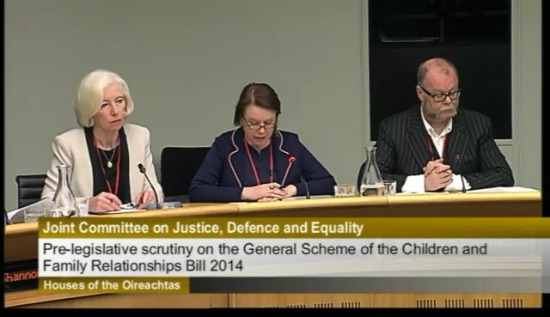
Today Karen Kiernan, One Family’s CEO and Stuart Duffin, our Director of Policy & Programmes, attended the hearings by the Joint Oireachtas Committee on Justice in relation to the Children & Family Relationships Bill and highlighted our concerns regarding ancillary supports for court, child safety issues and Child Contact Centres. Karen’s presentation is included below and the full transcript of the discussion can be read here on Oireachtas.ie, with our submission on page 5 and follow-up questions later in the document.
Introduction
One Family is Ireland’s leading organisation for one-parent families, providing services to people parenting alone, sharing parenting and going through family transitions. Our policy work is rooted in our extensive family support work over the past four decades.
We welcome the heads of this Bill as it is long overdue and badly needed to support the thousands of families in need of family law services every year. This Bill attempts to reflect the realities that many children and their parents experience in Ireland today and to provide safety and security for them.
We refer the Committee to our written submission for an overview of all our recommendations; however, today we are going to focus our comments on issues relating to Part 7 – Guardianship, Custody and Access, Part 8 – Safeguarding Interests of Children and Part 9 of the Bill – Making Parenting Orders Work.
We are very familiar in One Family with the practical, financial and legal challenges faced by mothers and fathers going through the family law courts in relation to separation, custody, access, maintenance, domestic violence and related issues. We have been particularly concerned with the lack of information and services available to family law courts when they attempt to make orders in relation to these issues.
Child Contact Centres
We undertook research into the need for Child Contact Centres in Ireland which we published in 2009. Child Contact Centres are safe, neutral and child-centred services where children can spend time with their non-resident parent. They are widespread outside Ireland and are used by courts, social services and families as safe places for high-conflict families to facilitate children having an ongoing relationship with the parent whom they do not live with who is often their father.
Following this research we received funding for a two year pilot project which we delivered in partnership with Barnardos. We offered family and risk assessments, court reports, contact services including handovers, supported contact and supervised contact, family support services including counselling, play and art therapy for children, parent mentoring and mediated parenting plans. These services cost about €200K per year and have closed due to lack of funding.
The independent evaluation of this project was launched last week at an event attended by five members of the judiciary, a large number of legal practitioners as well as family support services, with overwhelming support for the service expressed and offers of resources made. The key policy issues that have arisen through this work which were also published last week are extremely relevant to the Children & Family Relationships Bill and there is an opportunity to get this right for children in the future.
Evidence-based Court Orders
At the moment, family law courts are making critical decisions about children and families in a vacuum. They do not make evidence-based decisions, unlike other branches of law. Irish family law courts do not have independent, quality information on the families presenting to them because unlike other jurisdictions we do not have a court welfare system. This must change.
It is not possible for Head 32: Best interests of the child for example or Head 63: Enforcement Orders to function as you might envisage if courts are not resourced with relevant background information on the family. Children are having unsafe and unsuitable contact with their non-resident parent on a daily basis in Ireland because courts are ordering it as there is a strong pro-contact assumption inherent in family law, because courts do not have full information on the extent and impact of domestic violence and abuse, because courts do not have independent information on addiction and mental health issues, because parents may not recognise the negative impact of violence on their children or their ability to parent, and because courts do not have anywhere to refer parents to for family or contact supports.
So what are the solutions and what can you do?
The provision of a court welfare system must be included in this legislation as family assessments are the basis for making evidence-based decisions. The need for courts and social services to collaborate much more closely to ensure the safety of children is required. A range of appropriate family support services must be included that families can be referred to including a national network of Child Contact Centres. Children’s voices and their best interest may be more appropriately determined through external independent services as was facilitated in Child Contact Centres. The legislation should be clearer around domestic violence and abuse and the required support systems. The legislation must be clear on the range, the benefits and limitations of family supports. There is a serious impediment to people with low incomes accessing family supports however and resourcing needs to be looked at in the future.
Inclusion in this legislation is just one of the steps required to ensure safety for children in private family law proceedings and to avoid repeated court visits for high-conflict families. We estimate that each of the 17 Child & Family Agency areas could have a comprehensive, trained and accredited Child Contact Centre service including all family assessments, contact services and family support services for a total cost of €3.5m per year. We believe that this is excellent value for money particularly compared to legal or court based supports and this is a defined rather than open funding stream.
Press Release
Childcare 101 – Government must Prioritise Childcare Provision as a Downturn-Buster
(Dublin, Monday 7 April 2014) One Family – Ireland’s leading organisation for one-parent families in Ireland today – outlines the three major reasons that provision of affordable, accessible childcare is a necessity if Ireland is to make a full economic recovery soon. A new report due for release by the Organisation for Economic Co-operation and Development (OECD) will show that a family in Ireland with two children spends 40% of its average wage to meet childcare costs. Ireland is one of the most expensive countries worldwide for childcare services, second only to the US, and this is financially crippling and impeding low income and one-parent families from successfully moving into or staying in employment.
ONE: The rising participation of women in paid work has heightened demands for affordable, high-quality child care programmes, particularly for those parenting alone. There is a greater focus on the need for programmes that can prepare children to succeed at school, improve the well-being of vulnerable children, and enable the participation of parents in the labour force and in continuing education. Provision of childcare delivers on the Government’s own policy of welfare to work.
TWO: Childcare must be seen as a whole of Government programme and childcare policy should be integral to the attack on poverty. Channelling support for parents through the tax system will help to make work pay. Stuart Duffin, One Family Director of Policy & Programmes, comments: “In Ireland, childcare is mainly left to the market. The unsurprising consequence is that the poorer the area, the scarcer and less affordable the childcare. Affordable, available childcare remains a myth for too many families. Focussing and delivering on an outcome based budget this year, which asserts the enabling role of childcare across Government, will deliver a thriving economy and create better lives for all families, particularly those parenting alone for whom the welfare trap can be more difficult to escape.”
THREE: High quality, regulated childcare (through an enhanced quality assurance system), incentivised through tailored tax credits, will give Ireland a leading edge for inward investment. Good childcare also promotes quality jobs, quality careers and a quality workforce. A new Community Employment initiative treats its childcare placements like an apprenticeship. This is a structured and quality labour-market entry programme for those who want to progress into employment in this area. One Family calls for increased availability of these places, which will enable those in receipt of social welfare benefits an opportunity to move into gaining real marketable skills, and raise the level of professionally qualified workers in the sector. Childcare promotes economic and workforce development.
One Family reiterates its call to Government to enact its 10 Solutions campaign, with an immediate focus on childcare. All children deserve the best start in life.
Further information on One Family’s 10 Solutions is available here.
About One Family
One Family was founded in 1972 and is Ireland’s leading organisation for one-parent families offering support, information and services to all members of all one-parent families, to those experiencing an unplanned pregnancy and to those working with one-parent families. Children are at the centre of One Family’s work and the organisation helps all the adults in their lives, including mums, dads, grandparents, step-parents, new partners and other siblings, offering a holistic model of specialist family support services. These services include the lo-call askonefamily national helpline on 1890 622 212, counselling, and provision of training courses for parents and for professionals. One Family also promotes the Family Day Festival, an annual celebration of the diversity of families in Ireland today, with 10,000 people attending in 2013 (www.familyday.ie). For further information, visit www.onefamily.ie.
Available for Interview
Stuart Duffin, Director of Policy & Programmes | t: 01 662 9212 or 087 062 2023
Karen Kiernan, CEO | t: 01 662 9212 or 086 850 9191
Would you like to contribute to our Budget 2015 submission? It’s easy – simply take our anonymous 3 question survey. Each short monthly survey has a focus on a different budget submission topic.
This month’s survey is on Housing Supports.
Take the survey and know that your voice is heard.
If you would like to view the results of previous surveys, they are available here.
One Family launches the Evaluation of the Child Contact Centre pilot services and our Key Learnings document containing Policy Recommendations for Policy Makers today, Friday 28 March in the Chester Beatty Library, Dublin Castle at 9.30am. Speakers include the Hon Mr Justice Michael White of the High Court and Chair of the Courts Family Law Committee; Dr Stephanie Holt of the School of Social Work and Social Policy, Trinity College Dublin; and One Family CEO Karen Kiernan.
The services were run on a pilot basis in two locations in north and south Dublin between 2011 and 2013 by One Family and Barnardos in a partnership arrangement, offering a range of assessment, contact and family support services to high-conflict families who were frequently in legal disputes in relation to contact arrangements for their children. These Child Contact Centres provided a safe, neutral, child-centered environment for children to spend time with the parent/s they do not live with. Common challenges for families included domestic abuse, poor mental health and addiction.
The following documents were launched and can be read/downloaded below:
One Family_Child Contact Centre_Key Learnings March 2014 – PDF
Child Contact Centre Executive Summary December 2013 – PDF
Child Contact Centre Evaluation December 2013 – PDF
You can also read our Press Release, issued on Thursday 27 March 2014:
Courts Need Professionally Conducted Assessments to Ensure Child Safety
Our Response to Draft Heads of Children and Family Relationships Bill: Submission on the Children and Family Relationships Bill 2014 to the Joint Committee on Justice, Defence and Equality can be read here: Children and Family Relationships Bill 2014 – Response to Draft Heads.
Many children find it difficult to settle down at bedtime which can lead to challenges. For this week’s ’10 Ways to …’ post offering parenting tips, we look at how to establish your child’s bedtime routine. Here are some tips that should help:
- Adequate Sleep: How much sleep does your child need every day? Use the guide to help you choose an appropriate bedtime: 1-3 years: 10-15 hours including naps / 4-7 years: 10-13 hours with no naps.
- Reduce naps: Once children reach preschool age, naps are no longer necessary. It is best to get your child to bed early and get adequate sleep at night time. Early to bed and early to rise!
- Routines are crucial: Develop a clear routine around bedtime with your child and stick to it. The bedtime routine should start no later than 30 minutes prior to your child being in bed.
- Snacks: It is important to ensure your child is not hungry going to bed but be careful about food choices offered late in the evening. Too much sugar will not aid sleep.
- Consistency: Children are consistent in how they sleep and wake. If you let them stay up late, they will generally still get up at their usual time meaning that you’ll probably have a day ahead with a cranky child – and parent.
- Quality time: As part of your routine, plan relaxing, wind-down activities for the hour leading up to bedtime. Too much activity close to bedtime can keep children from falling asleep. Think about what play is good to help children relax and calm down.
- Share time: Parents and children need to relax together and reconnect after the day. Share stories from your day and talk about what is happening the next day. Children will sleep better when they have had time to tell you about any worries they might have and to share their stories, and they feel safe knowing what tomorrow brings.
- Behaviour: The right time to change behaviours is not when everyone is tired. Think about what is problematic and plan changes. Involve your child in the changes. Make sure they know about this prior to bedtime.
- The bedroom: Keep it quiet and calm. Make sure the lighting is just right and ensure your child feels safe. Baby monitors are great at all ages as they reassure a child that their parent will hear them if they call out.
- Support children in developing self soothing skills: Encourage your child to soothe themselves back to sleep. Talk about what might help them to do this during the day, not at night time. Agree in advance what the child can do – can they come to your bed or do you go to them?
This ’10 Ways to …’ feature is compiled by Grace Mulligan, Crèche Team Leader, One Family.
Coming soon: 10 Ways to Successful Toilet Training and 10 Ways to Happy School Breaks.
The One Family parenting skills courses Positive Parenting and Family Communications are enrolling now. Click here for information.
Press Release
Courts Need Professionally Conducted Assessments to Ensure Child Safety
Child Contact Centre Pilot Services Evaluation Launched by One Family
(Dublin, Thursday 27 March 2014) One Family – Ireland’s leading organisation for one-parent families – launches the Evaluation of the Child Contact Centre pilot services and its Policy Recommendations for Policy Makers document on Friday 28 March in Dublin Castle. Speakers include the Hon Mr Justice Michael White of the High Court and Chair of the Courts Family Law Committee; Dr Stephanie Holt of the School of Social Work and Social Policy, Trinity College Dublin; and One Family CEO Karen Kiernan.
Child Contact Centre services were run on a pilot basis in two locations in north and south Dublin between 2011 and 2013 by One Family and Barnardos in a partnership arrangement. The service offered a range of assessment, contact and family support services to high-conflict families who were frequently in legal disputes in relation to contact arrangements for their children providing a safe, neutral, child-centered environment for children to spend time with the parent/s they do not live with. Common challenges for families included domestic abuse, poor mental health and addiction.
Families ranged across socio-economic backgrounds and the services were mainly used constructively by courts. Referrals to the service were from the courts (35%), self-referrals (29%) and the HSE/Social Workers (22%). 40% of families had a HSE Social Worker. Currently children may be court-ordered into unsafe contact/access situations due to inadequate information available to court.
An evaluation of the service was conducted by Candy Murphy of CMAdvice and Dr Stephanie Holt of the School of Social Work & Social Policy, Trinity College Dublin based on data for the period October 2011 to April 2013. Dr Stephanie Holt, Director of Teaching and Learning at Trinity’s School of Social Work and Social Policy comments: “For approximately 10-30% of separated families, the process by which contact is agreed is problematic and potentially dangerous. Some parents (both perpetrators and victims of domestic violence) may not see that domestic abuse impacts negatively on their ability to parent well or that such abuse may negatively impact their children. The service worked closely with all parties providing a safe place for the voice of the child to be heard and a core focus on the child’s best interest. With child-centred therapeutic support even young children were able to articulate what they wanted in terms of contact.”
Karen Kiernan, One Family CEO, in responding to the Evaluation, summarises One Family’s recommendations to policy makers: “The courts need access to professionally conducted family assessments in order to make child-centred decisions that will be safe and enforceable. This will save court time and ensure that children do not experience unsafe court-ordered contact visits. Child Contact Centre services offering supervised, supported and handover contact, in conjunction with family supports including counselling, parent mentoring and child therapy, must be part of the ancillary court services contained in the Children & Family Relationships Bill. Effective cross departmental and interagency working is essential involving the Department of Justice and Equality including the Courts Service, the Probation Service, the Legal Aid Board, the Family Mediation Service and COSC; and the Department of Children and Youth Affairs including the Child and Family Agency which now has responsibility for child protection and welfare.”
Key Statistics
- Referrals to the service were from the courts (35%), self-referrals (29%) and the HSE/Social Workers (22%). 40% of families had a HSE Social Worker.
- The average age of parents was 33 years old and 79% of parents were unmarried.
- There was an average of two children per family and 66% of the children were aged 8 or younger.
- 72% of families had been in or were in court proceedings with 58% of families having Access Orders in place.
- 77% of children had either never lived with their non-resident parent or not lived with them for over a year.
- At the time of the referral, 61% of children had no contact with their non-resident parent.
- 59% of families in the service were assessed as having a current risk of child abuse and 50% of families had a current risk of domestic violence.
- 23 Child Protection Notifications were sent by the service to the HSE in respect of 38 children.
- The service offered children and parents 455 contact opportunities of which 333 (73%) were taken up.
- The service offered a total of 502 counselling and parent-mentoring sessions of which 387 (77%) were taken up.
Further Information
Child Contact Centre: Key Learnings – One Family
Final Evaluation of the Barnardos/One Family Pilot Child Contact Centre – CMAdvice Ltd
Executive Summary of the Barnardos/One Family Pilot Child Contact Centre – CMAdvice Ltd
About One Family
One Family was founded in 1972 as Cherish and is Ireland’s leading organisation for one-parent families offering support, information and services to all members of all one-parent families, to those experiencing an unplanned pregnancy and to those working with one-parent families. Children are at the centre of One Family’s work and the organisation helps all the adults in their lives, including mums, dads, grandparents, step-parents, new partners and other siblings, offering a holistic model of specialist family support services. These services include the lo-call askonefamily national helpline on 1890 622 212, counselling, and provision of training courses for parents and for professionals. One Family also promotes the Family Day Festival in Dublin’s Iveagh Gardens. This annual celebration of the diversity of families in Ireland takes place on Sunday 18 May 2014 (www.familyday.ie). For further information, visit www.onefamily.ie.
Available for Interview
Karen Kiernan, CEO, One Family
Dr Stephanie Holt, School of Social Work and Social Policy, Trinity
For Interview Scheduling/Further Information
Shirley Chance, Director of Communications | t: 01 662 9212 or 087 414 8511 | schance@onefamily.ie
For our ’10 Ways to …’ feature this week, we explore why play is important. Read on for our ‘10 Ways to Understand the Value of Play’.
The importance of play in a child’s life cannot be underestimated. Play is a child’s work and is “serious stuff”.
- Importance of play: Play fosters a child’s development in every way imaginable. Play helps develop self-esteem and social skills, motor skills, and aids physical development and a child’s intelligence.
- Different forms of play: There are many ways in which children play. Play can be inside or out, using toys or using household items. The imagination can be very active or the child may be focused on a puzzle or constructing a tower. It might be with water or sand, paint or dough. They may love dolls and playing house. Whatever it is, they are learning. Add things in for children to play with which will extend their learning. Such as water in the sand, bubbles in the water etc.
- Language: Through play, children are learning new words every day. They are playing with parents and others and have to use language to communicate and play the game they want.
- The 20 minute tool: By sitting with and playing with your child every day for 20 minutes, you will not only learn a vast amount of information about your child, how they think and how they see and feel the world but you will also be supporting them to play and helping them learn.
- Value play: Allow children time to play. Give them notice of when play time is up, as it’s time to eat or sleep or go out. Respect their time to play and notice when they are playing well with others.
- Social skills: Children learn how to socialise and be with others through play. Initially children like to play alone but as they reach school age they see the value in playing with others as opposed to alongside them. Sharing and taking turns can be hard work and play supports children to practice this.
- Emotions: You will often see children play the same role play game over and over and then one day it stops. Children will act out what they see important adults in their lives do. This helps them to learn and to understand what is happening and the roles we are playing in the world.
- Physical well-being: Outdoor play in particular is so important for children. They get their exercise through playing in the park, running, hide and seek, ball games etc. Children will be happier and more confident when they are fit and healthy.
- Aids learning: School can be difficult for some children. It is important to remember when they get in from school to allow play time. They need this to process what has happened in school, with teachers and with friends. They can feel energised after some play and then homework will usually go a lot smoother.
- All ages play: Children from birth onwards play, it just changes as they grow and develop. Play with your child from day one. Get comfortable with playing with them and you will be creating a solid foundation for your life together.
This ’10 Ways to …’ feature is compiled by Grace Mulligan, Crèche Team Leader, One Family.
Coming soon: 10 Ways to Make Bed Time Better and 10 Ways to Successful Toilet Training.
The One Family parenting skills courses Positive Parenting and Family Communications are enrolling now. Click here for information.
Press Release
Childcare Provision Failure is One of Government’s Harshest Blows to One-Parent Families
www.onefamily.ie
(Dublin, Wednesday 19 March 2014) One Family – Ireland’s leading organisation for one-parent families in Ireland today – responds to the pending publication of a new report due for release later this month by the Organisation for Economic Co-operation and Development (OECD) which will show that a family in Ireland with two children spends 40% of its average wage to meet childcare costs. Ireland is one of the most expensive countries worldwide for childcare services.
One Family has been calling for affordable, accessible childcare for many years and putting forward to Government our no-cost and low-cost solutions as part of our 10 Solutions campaign. Lack of childcare remains one of the greatest barriers to lone parents wishing to return to work and/or education. Karen Kiernan, One Family CEO, responds to the pending publication of the OECD report as follows: “This new report is timely. Currently Minister Fitzgerald is reviewing the myriad of child support schemes and their impact on low income families. One Family is recommending an amalgamation of supports into a single accessible and tailored Childcare and Out of School Care financial support programme to ensure work pays for low income families and enables them to get out of consistent and persistent poverty.”
Lone parents on social welfare will be activated (turned into job-seekers) when their youngest child is 7 years old. Success relies on activation being underpinned by local, affordable, accessible and quality child and out of school care. This is not the case as the spread and reach of services is patchy. Stuart Duffin, One Family’s Director of Policy & Programmes, comments, “There is little room for injecting funding into delivery of existing services so we need to be creative, innovative and entrepreneurial in how we craft and model provision using available resources and assets. The outcomes need to support the needs of parents and the exchequer.”
Worldwide, many innovative schemes are in place. Yesterday a major new childcare package was launched in the UK. It aims to help millions of parents, enabling them to go out to work and providing more security for their families, while directing extra support to those children from disadvantaged backgrounds through a tax free Childcare allowance. In New Zealand, the Out of School Care and Recreation (OSCAR) Subsidy is proving to be a good economic policy.
Government is charged to commit to protecting and building childcare and out of school care spaces in both the short and long term, for families in transition and particularly for those parenting alone. For low-income parents, the lack of access to quality and affordable childcare remains a fundamental challenge to participation in the labour market. Their ability to work is jeopardised which makes the entire childcare system vulnerable and ultimately the economy as a whole. Provision of childcare and OSCAR, both before and after-school care, is an economic driver. A value-for-money and quality assured childcare service can be delivered by a well designed tax credit system which can provide the targeted support needed to help lone parents secure the employment opportunities that would lead to financial independence.
One Family reiterates its call to Government to enact its 10 Solutions campaign, with an immediate focus on childcare. All children deserve the best start in life.
About One Family
One Family was founded in 1972 and is Ireland’s leading organisation for one-parent families offering support, information and services to all members of all one-parent families, to those experiencing an unplanned pregnancy and to those working with one-parent families. Children are at the centre of One Family’s work and the organisation helps all the adults in their lives, including mums, dads, grandparents, step-parents, new partners and other siblings, offering a holistic model of specialist family support services. These services include the lo-call askonefamily national helpline on 1890 662 212, counselling, and provision of training courses for parents and for professionals. One Family also promotes the Family Day Festival, an annual celebration of the diversity of families in Ireland today, with 10,000 people attending in 2013 (www.familyday.ie). For further information, visit www.onefamily.ie.
Available for Interview
Karen Kiernan, CEO | t: 01 662 9212 or 086 850 9191
Stuart Duffin, Director of Policy & Programmes | t: 01 662 9212 or 087 062 2023
Further Information/Scheduling
Shirley Chance, Director of Communications | t: 01 662 9212 or 087 414 8511
Child Contact Centre services were run on a pilot basis in two locations in north and south Dublin between 2011 and 2013 by Barnardos and One Family in a partnership arrangement. The service offered a range of assessment, contact and family support services to high-conflict families who were frequently in legal disputes in relation to contact arrangements for their children.
‘A Child Contact Centre is a safe, friendly and neutral place where children can spend time with the parent/s they do not live with. It is a child centred environment which allows the child to form or develop a relationship with the parent at their own pace and in their own way, usually through play and child centred activities.’
The services to families that the Child Contact Centre provided included:
- Assessment to identify whether contact is in the best interests of the child and if so what supports the child and family require including risk assessment.
- Preparation for contact the child and for both parents.
- Supervised contact, supported contact and handover contact services.
- Family supports for parents including individual parent mentoring, mediated parenting plans and counselling.
- Family supports for children including play therapy and art therapy.
- Regular reviews with inputs from the child wherever possible and from both parents.
- Pre and post-contact family supports as required.
- Information on and referral to other services as required.
- Court reports as appropriate.
On Friday 28 March, One Family will launch the Evaluation of the Child Contact Centre Pilot Services and our Policy Recommendations in Response to the Evaluation from 9.30am to 11am in the Chester Beatty Library, Dublin Castle. Speakers include: The Hon. Mr. Justice Michael White of the High Court and Chair of the Courts Family Law Committee; Dr. Stephanie Holt of the School of Social Work & Social Policy, Trinity College Dublin; and Karen Kiernan, CEO of One Family.
All are welcome to attend but as a limited number of places are available, RSVP is essential. If you wish to attend, please RSVP by email to onefamily@onefamily.ie or call 01 662 9212 by Wednesday 26 March.
One Family has submitted a Response to the Draft Heads of the Children and Family Relationships Bill to the Joint Committee on Justice, Defence and Equality.
One Family holds a broad and inclusive view of family life and we work with people who parent alone, people who share parenting of their children as well as families who are in transition e.g. going through the process of separation or becoming a step or blended family. Children are at the centre of what we do and we hold and actively promote the child’s best interest principle, as well as working from a human-rights based approach.
We offer a wide range of specialist and expert family support services, which form the basis of our Professional Development Service and our practice to policy and advocacy work. The opinions and recommendations in this submission are based on the lived reality of the families we work with who live in challenging and diverse situations, on national and international best practice evidence, and on socio-legal research.
This submission is available as a PDF to read and/or download here: Children and Family Relationships Bill – Response to Draft Heads.
Press Release
An International Women’s Day Focus –
Mother’s Education Level and Impacts on Lone Parenthood and Well-Being of Children
(Dublin, Friday 7th February 2014) One Family – Ireland’s leading organisation for one-parent families in Ireland today – looks forward to acknowledgment of International Women’s Day on Saturday 8th March and calls for a new look at education for women in Ireland. Founded by a small group of strong, progressive women who rejected the accepted ‘norm’ to bring about great change including the abolition of the status of illegitimacy, One Family has worked to better the lives of women and children for over four decades.
A mother’s education level has a huge effect on the well-being of children. In Ireland, the majority of lone mothers are aged between 35 and 49 (CSO 2011). Tony Fahey, UCD in ‘Growing Up In Ireland’ (GUI 2011), found that early child-bearing (before the age of 25) is the main factor predicting lone parenthood, no matter what the educational level of the mother, but that less educated women are more likely to have a first birth before age 25. Currently this group represents 6% of the total number of lone parents in the state (CSO 2011). ‘Growing Up in a One-Parent Family’, a study by researchers at the University of Limerick using the ‘Growing Up in Ireland’ data published by the Family Support Agency in December, indicated that children from one-parent families and cohabiting families fare the same as children from married families when faced with similarly adverse conditions growing up. It concluded that the traditionally perceived benefits of marriage in relation to child development are not a result of marriage itself but are due to the parent or parents’ background and educational levels.
The increase in child well-being over the past 40 years can be attributed to the better education of women, according to GUI 2011. Karen Kiernan, One Family CEO, comments: “The effect of women’s educational expansion on child well-being is enormous. Better educated women may be more likely to understand the development needs of their children and resourced to cope through stressful transitions. Improving women’s education tends to increase national wealth, which in turn improves population’s health.”
Worldwide, there were 8.2 million fewer deaths in 2011 among children younger than 5 than there were in 1970. Of those “averted deaths,” 4.2 million were the result of better-educated mothers and 590 million the result of higher-income households (Institute for Health Metrics and Evaluation at the University of Washington). The rest of the lives saved were attributable to better health interventions. Researchers used data from 915 sources, mostly surveys and censuses, gathered between 1953 and 2013. The experience of countries varied widely but the research found that women are now more educated than men in 87 countries, including nearly all the rich ones.
“These findings are not surprising, but the magnitude is impressive,” says Stuart Duffin, One Family Director of Policy & Programmes. “They clearly justify what One Family has been saying for a long time – that one of the investments we need to make is women’s education and this must be supported by wrap-around, affordable childcare.”
A lack of accessible and affordable childcare in Ireland remains one of the greatest barriers to women parenting alone being able to return to education, or employment, as highlighted in One Family’s ongoing 10 Solutions campaign. One Family provides free childcare in its on-site crèche for parents participating in its learning programmes. It offers education in three main areas: parenting skills for lone parents and those sharing parenting; welfare to work initiatives such as the 20 week New Futures programme; and accredited training for professionals working with lone parent families and families in transition – the flagship Positive Parenting and Family Communications programmes.
“We’re going from a world that was heavily dominated by male educational attainment to one where women are becoming more educated than men,” Stuart Duffin further observed. “The long-term social implications of that are pretty intriguing and are important for Ireland’s economic and social development.”
About One Family
One Family was founded in 1972 and is Ireland’s leading organisation for one-parent families offering support, information and services to all members of all one-parent families, to those experiencing an unplanned pregnancy and to those working with one-parent families. Children are at the centre of One Family’s work and the organisation helps all the adults in their lives, including mums, dads, grandparents, step-parents, new partners and other siblings, offering a holistic model of specialist family support services. These services include the lo-call askonefamily national helpline on 1890 622 212, counselling, and provision of training courses for parents and for professionals. One Family also promotes the Family Day Festival, an annual celebration of the diversity of families in Ireland today, with 10,000 people attending in 2013 (www.familyday.ie). For further information, visit www.onefamily.ie.
Available for Interview
Shirley Chance, Director of Communications | t: 01 662 9212 or 087 414 8511
Would you like to contribute to our Budget 2015 submission? It’s easy – simply take our anonymous 3 question survey. Each short monthly survey has a focus on a different budget submission topic.
This month’s survey is on changes to the One-Parent Family Payment (OFP) and income disregards introduced on 2nd January 2014.
Take the survey and know that your voice is heard.
If you would like to view the results of previous surveys, they are available here.
As part of our ’10 Ways to …’ series which offers tips for parents on a variety of topics, here are our ‘10 Ways to Healthier Eating‘.
- Menu: Plan the menu for the week ahead and make a list of the ingredients you will need. When you make a trip to the supermarket, stick to the menu created.
- Bring children shopping: Include children by bringing them to the supermarket with you. Tell them you have a list of what to get and that you are only buying things that are on the list. Show them all of the interesting fruit and vegetables on display. Try to buy a new vegetable or fruit each week.
- Get children an apron: Involve children in cooking – children from 2 years upwards can help with family cooking. The more children are involved in preparing healthy meals the more eager they will be to eat or at least taste what has been prepared.
- Visit a vegetable farm: Let children see how things grow and maybe plant some vegetables at home. Go fruit picking and try making some homemade jams.
- Educate children. Talk to children about their bodies and about all the things that our bodies need to stay healthy. Introduce food as one concept. Talk about the different types of food and what they can do for our health. Try Google for lots of ideas or look to the 1000 Days Campaign for inspiration which explores the profound impact the right nutrition has on a child’s ability to grow and learn.
- Role model: Be a role model for your child. You must do as you say and eat your own veggies. Find ways to make them taste nicer by looking up some new recipe ideas. Try to get over your own childhood horrors of eating vegetables.
- Days out: Get into the habit of bringing healthy snacks as treats. Grapes, melon, dried fruit, wholemeal crackers, yogurts etc are all nutritious and delicious.
- 3 meals: Encourage children to have 3 healthy meals each day and if possible sit at the table together to eat them. Don’t make meal times and eating a big issue however. Children need to get positive attention for good behaviours. Forcing children to eat and making them sit at the table for long periods will cause poor eating habits and lead to poor health.
- Involve children: Ask children what they like to eat and involve them in making lunches and planning the menu.
- Reward: Reward children for trying new foods. They don’t have to like the food but trying it is what you want to see. Never only offer a new food to a child once. From weaning onwards, offer a new food at least 20 times over a period of weeks before you resolve to the fact that your child really does not like it.
The ’10 Ways to …’ series is compiled by One Family’s Director of Children and Parenting Services, Geraldine Kelly.
Coming soon: 10 Ways to Enjoy School Breaks, 10 Ways to Improve Listening in the Home and 10 Ways to Build and Maintain a Close Relationship with your Teenager.
The One Family parenting courses Positive Parenting and Family Communications are enrolling now for March. Click here for information.
As part of our ’10 Ways to …’ series which offers tips for parents on a variety of topics, here are our ‘10 Ways to Survive Working Outside of the Home and Being a Parent of Young Children’.
- Be organised: Over organise everything – lunches, dinners, clothes.
- Cook and freeze: At the weekend, cook some favourite meals and freeze them for during the week – the children can help, they love helping!
- Stop washing: Keep the laundry for Friday evening and finish it on Saturday. Most children have enough clothes to last the week.
- Sleep: Go to bed as early as you can and forget about the telly. Record your favourite programmes instead and watch at the weekend. If this isn’t possible then ask your friends what’s happening in soap land.
- Eat: Eat at work! Don’t go home hungry with hungry children, homework and whatever else you may face. Try to be ready for the onslaught when you get in the door.
- Public transport: Use it if you can as this way you can get some extra sleep, read, check texts, emails and have some ME time. If in your car, try to listen to some nice music and relax on the journey.
- Exercise: Do it on your lunch break as it will help keep the happy hormones alive. Just 15 minutes of fresh air will help you feel you are looking after yourself.
- Stay calm: Breathe and remember it will all be okay. Everything takes longer when you have children so expect the process of getting out in the morning or getting anything done to go slowly.
- Play: Allow time to play with your children in the evening. Quality time is as crucial as good nutrition – they will sleep better if they have time with you and share your day.
- Enjoy: Your children are little and life can be hard but they will grow up so fast so enjoy the pleasure they can bring you. Try not to worry so much about getting everything done, just try to get done what must be done.
The ’10 Ways to …’ series is compiled by One Family’s Director of Children and Parenting Services, Geraldine Kelly.
Coming soon: 10 Ways to Enjoy School Breaks, 10 Ways to Improve Listening in the Home, 10 Ways to Build and Maintain a Close Relationship with your Teenager, and 10 Ways to Healthier Eating.
The One Family parenting courses Positive Parenting and Family Communications are enrolling now for March. Click here for information.
As part of our ’10 Ways to …’ series which offers tips for parents on a variety of topics, here are our ‘10 Ways to Make Reading a Part of Family Life‘.
- Join the library. The whole family could take a trip to the local library and sign up. It’s free! Find out what’s happening in your local library as they run great events too and you can then plan your family trips to correspond with events.
- Read together. Plan a time each day, or at least three times a week, to read together. Let the children read to their parent or parents to child. When a child becomes familiar with a story they can tell it from the pictures or from their memory – encourage this!
- Start a library in your home. Go the second hand shops and get great books for very little cost.
- Switch off the TV. For one evening every week, switch on the story telling in the family instead of the telly.
- Start early. Introduce children to books from six months onwards; bath books, music books and picture books.
- Role model. Let children see you read books and use books to find out about things. Yes, there’s Google but let children know there are other ways too.
- Bring books. Wherever you go – when in the car, in a queue, on a bus trip going to Granny’s – bring a book with you. You can pass the time reading to your child or encourage them to read themselves if you are driving or talking with someone.
- Visit book shops. They can be great fun. Let children see all the books they can choose from. Talk to them about authors and check out when writers are signing in shops.
- Create your own book. Encourage older children (6+) to write their own stories and to create pictures about simple things they like in life. You could get them bound and keep them forever.
- The Benefits. Reading together creates quality time which results in improved relationships. It teaches children about the world and the people in it. It helps develop imagination, increases your child’s language and vocabulary which improves chances at school, and concentration levels grow as stories gets longer with age. At bed time, reading helps us relax and can enable children to fall asleep more quickly.
The ’10 Ways to …’ series is compiled by One Family’s Director of Children and Parenting Services, Geraldine Kelly.
Coming soon: 10 Ways to Enjoy School Breaks, 10 Ways to Improve Listening in the Home, 10 Ways to Build and Maintain a Close Relationship with your Teenager, and 10 Ways to Healthier Eating.
The One Family parenting courses Positive Parenting and Family Communications are enrolling now for March. Click here for information.
Press Release
Children & Family Relationships Bill provides first steps to a modern Family Law system in Ireland –
but One Family warns that family law courts need the resources to do their job properly for all children
(Dublin, Thursday 30 January 2014) One Family – Ireland’s leading organisation for one-parent families in Ireland today welcomes the publication of the Heads of the Children & Family Relationships Bill 2014 by Minister Alan Shatter. As an organisation that has campaigned for over 40 years for legal recognition and support for the wide diversity of families that children live in, we believe this Bill is a good first step that is long overdue.
Karen Kiernan, One Family CEO explains: “This Bill when enacted will provide a higher level of legal security for some of the diverse one-parent families that children live in. We are particularly pleased to see that people who have caring responsibility for children such as step-parents will be able to apply for guardianship, that it will be easier for extended family members such as grandparents to gain contact with their grandchildren and that more non-marital fathers will become guardians automatically of their children.”
However, One Family has some serious concerns about how aspects of the Bill can really be implemented given the serious resource restrictions that exist, and the lack of consistency and specialist knowledge that can characterise some family law proceedings and the requirement to hear children’s voices.
Kiernan continues: “We are very concerned about the lack of family assessments available to judges in family law courts which can be essential when upholding the principle of ‘a child’s best interest’. We have seen that it is extremely difficult to make nuanced and life-changing decisions without full, impartial information on what is going on in a family. A robust court welfare system will need to be put in place that can assess issues such as child protection, domestic violence, parental capacity so that judges can make informed, reasoned decisions. Such a system could also effectively hear the voice of children of all ages. The current Heads indicates that the costs of such reports, counselling, mediation or parenting courses as ordered by court will be borne by the parents involved and this is not realistic for many families.
It is time that a standardised, holistic, family-centred approach is taken to family law in Ireland where the starting point has to be the child and their family rather than the traditions of the legal system. The Bill is well-intentioned but will need an implementation plan with an attached budget to really make a difference.”
Part of what Minister Shatter is working to resolve is in relation to parenting orders and plans that are not adhered to. One Family offers a range of specialist counselling and parenting supports to people going through separation, sharing parenting of their children as well as those who parent alone. One Family also ran the two pilot Child Contact Centres over the past three years in partnership with Barnardos – a service that is now closed due to lack of government funding.
Karen Kiernan further explains: “Whilst much of this Bill is an excellent improvement on what was there, there is a big miss in relation to Child Contact Centres which are not mentioned. They have been proven to be needed and effective in reducing the dangers for children in high conflict families, in ensuring parenting orders work and in supporting families to move on to self-arranged contact. No Government department has been willing to continue funding them and they are not provided for in the Heads of Bill as a necessary service for courts.”
About One Family
One Family was founded in 1972 and is Ireland’s leading organisation for one-parent families offering support, information and services to all members of all one-parent families, to those experiencing an unplanned pregnancy and to those working with one-parent families. Children are at the centre of One Family’s work and the organisation helps all the adults in their lives, including mums, dads, grandparents, step-parents, new partners and other siblings, offering a holistic model of specialist family support services. These services include the lo-call askonefamily national helpline on 1890 622 212, counselling, and provision of training courses for parents and for professionals. One Family also promotes the Family Day Festival, an annual celebration of the diversity of families in Ireland today, with 10,000 people attending in 2013 (www.familyday.ie). For further information, visit www.onefamily.ie.
Available for Interview
Karen Kiernan, CEO | t: 01 662 9212 or 086 850 9191
Further Information/Scheduling
Shirley Chance, Director of Communications | t: 01 662 9212 or 087 414 8511
The future of our families. What policies can do for children in vulnerable situations.
On 28th January 2014, leading experts from research, policy, and NGOs met in Brussels to discuss the most recent evidence on children in vulnerable situations and the potential scope of policy interventions. Stuart Duffin, our Director of Policy and Programmes, was a panelist.
A poor socioeconomic background and family disruptions, such as parent separation, may have an impact on the life-chances of children. But so far, empirical evidence is quite scarce. In two workshops, prominent experts discussed their most recent findings. For example, what role does divorce play for the cognitive abilities and school performance of children? Can institutionalised childcare and public custody compensate disadvantages due to difficult living conditions? Is there a difference between immigrant and native youths? And are there country-specific patterns which policy makers have to take into regard?
The workshops were organised by the Population Europe Secretariat (hosted by the Max Planck Institute for Demographic Research) and FamiliesAndSocieties, in cooperation with Oxford Population Centre | European University Institute | International Federation for Family Development | European Economic and Social Committee.
Stuart Duffin states: ‘‘There is no evidence to suggest that, although increasingly more commonplace, separation is an easy transition for children and parents. Partnership separation is not a single event. It is a complex process that unfolds over time and requires a series of reorganisations and adjustments. How children cope with parental separation is affected by developmental stage, temperament, cognitive capacities, and personal resilience.”
He continues: “Our experience of working with those parenting alone and those sharing parenting demonstrates that many children are resilient and can learn to manage the challenges and stress parental separation creates. Therefore, separation-specific interventions that build and restore competence can reduce reliance on social and legal systems. Preventive interventions that educate and support parents are an important component of successful family transition when they are introduced early in the process. Focused intervention plans, with clearly articulated goals reflecting children’s and families’ unique qualities, are recommended as a means of fostering resilience.”
| Population Europe is the network of 29 leading demographic research centres and 150 eminent researchers in Europe. As a collaborative network it provides comprehensive knowledge, information and insights into fundamental demographic trends and diverging population developments. This expertise is key to understanding the political, social and economic developments of Europe in the 21st century.The Population Europe Event has received funding from the European Union’s Directorate-General for Employment, Social Affairs and Inclusion under grant agreement n° VS/2012/0168 for the project Population Europe 2.0. | FamiliesAndSocieties is the European think-tank in the field of family policy research. It brings together 25 universities and research institutes in 15 European countries and three transnational civil society organisations. It aims to investigate the diversity of family forms, relationships and life courses in Europe, to assess the compatibility of existing policies with these changes and to contribute to evidence-based policy-making.The FamiliesAndSocieties Workshop has received funding from the European Union´s Seventh Framework Programme (FP7/2007-2013) under grant agreement n° 320116 for the research project Families And Societies. |
We invite you to Step Out with One Family and run/walk in the Mini Marathon as part of Team One Family. As Ireland’s leading organisation for people parenting alone and sharing parenting, and in the year of the 20th anniversary of UN International Year of the Family, we need people more than ever to take part with all funds raised contributing directly towards our work with some of the most vulnerable families in Ireland.
Team One Family participants will receive a sponsorship pack which includes:
- a sponsorship card
- a One Family t-shirt
- and information including Race Hints and Training Ideas
Our offices – Cherish House on Lower Pembroke Street – are on the mini marathon route and just a few minutes from the start and end points. Cherish House serve as a hub for our team on the day: a place to enjoy complementary refreshments, to change, store personal items, and chat.
The Flora Women’s Mini Marathon 2014 is 10K in distance and will take place on Bank Holiday Monday, 2nd June 2014 at 2.00pm. All participants must enter either through the official Entry Form which will appear in The Herald on Wednesdays and Saturdays from 19th February and online here.
A convenient way to collect donations from friends/family is through Sponsor.ie, the online fundraising tool that helps you to collect donations for your favourite charities. Sponsor.ie allows you to keep your supporters updated through photos and video and by linking to your existing social networking sites, such as Facebook and Twitter, it’s easy to let everyone know what an amazing thing you’ll be doing.
To set up your own fundraising page click here. To check out One Family’s Sponsor.ie page click here.
For more information, please email Fiona. We look forward to stepping out together!
Let your voice be heard! One Family is seeking willing participants to engage with our Budget 2015 Panel. The Budget Panel will consist of ten lone parents and/or parents sharing parenting who will collaborate with One Family throughout 2014.
Panel members will be encouraged to contribute their own lived experience and personal circumstances in order to enhance and parent proof One Family’s 2015 budget submission. We welcome expressions of interest from parents in a variety of circumstance, such as those in education or employment, in receipt of government supports, never married, separated, divorced etc. Ideally, they will be willing to engage with media and training will be provided. The panelists will work with us to produce a budget submission which reflects the lived reality for lone parents in Ireland.
Persons interested in taking part should:
- Wish to articulate their opinions and be comfortable discussing core budget issues (housing, childcare etc.)
- Currently live in Ireland – we hope to hear from people from both urban and rural areas
- Be able to commit to a minimum of three hours per month (a mixture of phone and online engagement with occasional meetings) on a volunteer basis
Existing One Family Members are encouraged to participate though it is not not essential for a panelist to be a Member.
If you are interested in being a One Family Budget 2015 Panelist, please click here to email Valerie Maher for further information by midday on Friday 24th January 2014.
UPDATE: 31st January 2014 – The Budget Panel is now filled and we look forward to collaborating with its members throughout the year.
Many worried parents are calling our askonefamily lo-call helpline regarding the Single Person Child Carer Credit which has replaced the One-Parent Family Credit from 1st January 2014. The Single Person Child Carer Credit (SPCCC) is different from the One-Parent Family Credit (OPFC) as now it is only available to one parent – the parent with whom the child lives for a majority of the year – whereas previously both parents could each claim the credit for their child.
Revenue refer to the Primary Claimant and the Secondary Claimant; the first being the parent with whom the child lives for either the full year or most of the year and the second being the parent with whom the child spends time and resides for at least 100 days in the year.
The qualifying conditions are:
- That your child is either born in the tax year, is aged under 18 at the start of the tax year or over 18 but in full time education.
- As the claimant you must not be cohabiting or be jointly assessed for tax (either as married or civilly partnered) or be married or civilly partnered (unless separated) or widowed or a surviving civil partner in the year for which you are making the claim.
Who can claim?
- If the parent with whom the child lives most of the time (primary claimant) does not avail of the SPCCC then it can be relinquished by completing the form SPCCC1. This then means the other parent (secondary claimant) can claim it by completing form SPCCC2, as long as they satisfy the criteria, in that the child must live with them for at least 100 days in the year.
- In instances where the court has awarded joint custody then the parent who receives the Child Benefit will receive the SPCCC. If they are not in employment, or they choose to do so, then it can be relinquished and the other parent can claim it instead, as the secondary claimant.
In the event of the primary claimant relinquishing the tax credit and the secondary claimant applying for and being allocated it, then it remains with this person for the full tax year. If the primary claimant then applies for it during the year (if they go into employment) then it will remain with the secondary claimant for the rest of that year but it will then be allocated to the primary claimant for the following tax year.
The Revenue website has a list of Frequently Asked Questions which may help you determine who may qualify for the SPCCC for your family, as well as links to the relevant forms which can be downloaded; click here for more information.
If you have any additional questions or concerns, please contact our askonefamily lo-call helpline on 1890 66 22 12 or by email.
The impact of these changes is likely to be initially most strongly experienced by parents as we reach the end of January as, for many, the first monthly salary of 2014 will be processed at that time. One Family will continue to advocate on this issue. To read our recent press releases concerning it, please click on the clicks below:
Government has hindered not helped One-Parent Families in 2013
Attack on Parents Sharing Parenting After Separation is Unjust, Unfair and Underhand
More attacks on working mothers and shared parenting; Budget 2014 is anti-family and anti-parent
One Family is one of twenty experts and stakeholders from across Europe contributing to Families and Societies, a large-scale integrating project on the factors that define and shape what families will look like in the future, coordinated through Stockholm University. The projects runs until 31 January 2017. Questions being addressed include: Are existing social and family policies compatible with changes in family patterns?
The main objectives of the project are:
- To investigate the diversity of family forms, relationships, and life courses in Europe.
- To assess the compatibility of existing policies with family changes.
- To contribute to evidence-based policy-making.
The overall conceptual framework is based on three key premises:
- Family life courses are becoming more diverse.
- The interdependency of lives matters.
- Social contexts and policies matter.